World
Monday, October 19, 2026
Events · Analysis · Developments

SHBA zgjeron sanksionet për të bllokuar qasjen e Iranit në kapital
Uashington — Shtetet e Bashkuara kanë nisur një fushatë të re dhe të gjerë të presionit ekonomik ndaj Iranit, të quajtur “Operation Economic Outcast”, me synimin që Teheranit t’i kufizohet më tej qasja në sistemin financiar ndërkombëtar.
Sekretari amerikan i Thesarit, Scott Bessent, e ka përshkruar iniciativën si një “D-Day ekonomik”, duke sinjalizuar një fazë të re të politikës amerikane të sanksioneve ndaj Iranit.
Në qendër të strategjisë është jo vetëm goditja e drejtpërdrejtë e institucioneve dhe kompanive iraniane, por edhe ushtrimi i presionit ndaj subjekteve të huaja që vazhdojnë të mundësojnë qarkullimin e kapitalit iranian në tregjet ndërkombëtare.
Fushata amerikane përqendrohet veçanërisht në pesë sektorë që Uashingtoni i konsideron të rëndësishëm për sigurimin e të ardhurave dhe anashkalimin e sanksioneve nga Irani: asetet digjitale dhe kriptovalutat, ari, aviacioni, teknologjia dhe transporti detar.
Në kuadër të masave të para janë vendosur sanksione ndaj dhjetëra individëve, kompanive dhe anijeve të lidhura me rrjete iraniane.
Administrata amerikane pretendon se këto rrjete kanë ndihmuar Teheranin në sigurimin e të ardhurave, tregtinë e naftës, prokurimin e teknologjisë dhe shmangien e kufizimeve ekzistuese.
Një prej elementeve më të rëndësishme të operacionit është perspektiva e sanksioneve dytësore.
Kjo do të thotë se presioni amerikan mund të mos kufizohet vetëm te subjektet iraniane. Bankat, institucionet financiare dhe kompanitë e vendeve të tjera që vazhdojnë transaksionet me subjekte të caktuara iraniane mund të përballen gjithashtu me masa nga Uashingtoni.
Bessent ka paralajmëruar se vazhdimi i bashkëpunimit financiar me Iranin mund t'i ekspozojë institucionet e huaja ndaj rrezikut të humbjes së qasjes në sistemin financiar amerikan dhe dollarin.
Administrata e presidentit Donald Trump synon që presioni të shtrihet përtej kufijve të Iranit, duke goditur infrastrukturën ndërkombëtare që i mundëson Teheranit të tregtojë, të transferojë para dhe të sigurojë kapital.
Në praktikë, kjo mund t'i vendosë kompanitë dhe institucionet financiare ndërkombëtare përballë një zgjedhjeje: të vazhdojnë marrëdhëniet me Iranin ose të ruajnë qasjen e tyre në sistemin financiar amerikan.
“Operation Economic Outcast” është paralajmëruar si një fushatë më e gjerë dhe jo si një paketë e vetme sanksionesh, çka nënkupton se masa të tjera mund të ndërmerren në vazhdim.
Nëse zbatohet në shkallën e paralajmëruar nga Uashingtoni, strategjia mund ta rrisë ndjeshëm presionin jo vetëm mbi ekonominë iraniane, por edhe mbi partnerët tregtarë dhe financiarë të Teheranit në vende të tjera.
Sekretari amerikan i Thesarit, Scott Bessent, e ka përshkruar iniciativën si një “D-Day ekonomik”, duke sinjalizuar një fazë të re të politikës amerikane të sanksioneve ndaj Iranit.
Në qendër të strategjisë është jo vetëm goditja e drejtpërdrejtë e institucioneve dhe kompanive iraniane, por edhe ushtrimi i presionit ndaj subjekteve të huaja që vazhdojnë të mundësojnë qarkullimin e kapitalit iranian në tregjet ndërkombëtare.
Fushata amerikane përqendrohet veçanërisht në pesë sektorë që Uashingtoni i konsideron të rëndësishëm për sigurimin e të ardhurave dhe anashkalimin e sanksioneve nga Irani: asetet digjitale dhe kriptovalutat, ari, aviacioni, teknologjia dhe transporti detar.
Në kuadër të masave të para janë vendosur sanksione ndaj dhjetëra individëve, kompanive dhe anijeve të lidhura me rrjete iraniane.
Administrata amerikane pretendon se këto rrjete kanë ndihmuar Teheranin në sigurimin e të ardhurave, tregtinë e naftës, prokurimin e teknologjisë dhe shmangien e kufizimeve ekzistuese.
Një prej elementeve më të rëndësishme të operacionit është perspektiva e sanksioneve dytësore.
Kjo do të thotë se presioni amerikan mund të mos kufizohet vetëm te subjektet iraniane. Bankat, institucionet financiare dhe kompanitë e vendeve të tjera që vazhdojnë transaksionet me subjekte të caktuara iraniane mund të përballen gjithashtu me masa nga Uashingtoni.
Bessent ka paralajmëruar se vazhdimi i bashkëpunimit financiar me Iranin mund t'i ekspozojë institucionet e huaja ndaj rrezikut të humbjes së qasjes në sistemin financiar amerikan dhe dollarin.
Administrata e presidentit Donald Trump synon që presioni të shtrihet përtej kufijve të Iranit, duke goditur infrastrukturën ndërkombëtare që i mundëson Teheranit të tregtojë, të transferojë para dhe të sigurojë kapital.
Në praktikë, kjo mund t'i vendosë kompanitë dhe institucionet financiare ndërkombëtare përballë një zgjedhjeje: të vazhdojnë marrëdhëniet me Iranin ose të ruajnë qasjen e tyre në sistemin financiar amerikan.
“Operation Economic Outcast” është paralajmëruar si një fushatë më e gjerë dhe jo si një paketë e vetme sanksionesh, çka nënkupton se masa të tjera mund të ndërmerren në vazhdim.
Nëse zbatohet në shkallën e paralajmëruar nga Uashingtoni, strategjia mund ta rrisë ndjeshëm presionin jo vetëm mbi ekonominë iraniane, por edhe mbi partnerët tregtarë dhe financiarë të Teheranit në vende të tjera.
Ad space

Trump Announces Agreement Between the United States and Iran
Trump Announces Agreement Between the United States and Iran
The United States and Iran have reached an agreement aimed at ending months of hostilities, according to statements from U.S. President Donald Trump and Pakistani Prime Minister Shehbaz Sharif, who has been mediating talks between the two sides, The Washington Post reported.
Trump said on Sunday that the agreement with Iran had been finalized, describing it as a significant step toward stabilizing the region. According to him, the deal includes the reopening of the Strait of Hormuz and the end of the U.S. naval blockade of Iranian ports.
Meanwhile, Sharif announced that both parties had agreed to an immediate and permanent cessation of military operations on all fronts, including in Lebanon. He added that an official signing ceremony is expected to take place in Switzerland on Friday, while additional mediation meetings are scheduled throughout the week.
If formalized as planned, the agreement would represent the most significant accord between the United States and Iran since the start of the four-month conflict, which has had a substantial impact on global energy markets and regional security.
In this section

World
EU accuses Russia of a “Digital Iron Curtain”
The President of the European Commission, Ursula von der Leyen, stated that the European Union is increasing its support for Ukraine and accelerating efforts toward energy independence, in a speech before the European Parliament.
She confirmed that the EU will disburse the first €45 billion tranche from the total €90 billion package for Ukraine during this quarter. According to her, one-third of the funds will be used for budgetary needs, while two-thirds will go toward defense, including an initial package of around €6 billion for drones produced and used by Ukraine itself.
“As Russia escalates its aggression, Europe is doubling down on its support for Ukraine,” von der Leyen said, adding that the EU has also adopted its 20th sanctions package against Russia. She argued that the sanctions are having a significant impact on the Russian economy, with rising inflation and interest rates, while restrictions on the internet and communication are creating what she described as “a new Digital Iron Curtain.”
Regarding developments in the Middle East, von der Leyen said that after weeks of tension, a temporary lull has been reached and that the EU supports maintaining the ceasefire in Iran and Lebanon. She emphasized the importance of restoring full freedom of navigation in the Strait of Hormuz and the need for any peace agreement to address Iran’s nuclear and ballistic missile program.
The recent crisis, she noted, has once again exposed Europe’s structural vulnerabilities in energy. She revealed that in just 60 days of conflict, the cost of fossil fuel imports has increased by more than €27 billion, without any real increase in supply.
“Overdependence on imported fossil fuels makes us vulnerable,” she said, calling for increased production of clean energy within Europe, including renewables and nuclear power.
Von der Leyen outlined a package of measures that includes greater coordination in gas supply and fuel reserves, targeted protection for the most vulnerable households and businesses, and reduced energy demand through efficiency and electrification.
She stressed that electrification is essential for the continent’s future, warning that energy demand will rise significantly due to the rapid growth of artificial intelligence and data centers. According to her, the EU will present a new electrification plan by the summer.
“Without new resources, the choice is clear: either higher national contributions or lower investment. At a time when we need more Europe, this is not an option,” she concluded.
She confirmed that the EU will disburse the first €45 billion tranche from the total €90 billion package for Ukraine during this quarter. According to her, one-third of the funds will be used for budgetary needs, while two-thirds will go toward defense, including an initial package of around €6 billion for drones produced and used by Ukraine itself.
“As Russia escalates its aggression, Europe is doubling down on its support for Ukraine,” von der Leyen said, adding that the EU has also adopted its 20th sanctions package against Russia. She argued that the sanctions are having a significant impact on the Russian economy, with rising inflation and interest rates, while restrictions on the internet and communication are creating what she described as “a new Digital Iron Curtain.”
Regarding developments in the Middle East, von der Leyen said that after weeks of tension, a temporary lull has been reached and that the EU supports maintaining the ceasefire in Iran and Lebanon. She emphasized the importance of restoring full freedom of navigation in the Strait of Hormuz and the need for any peace agreement to address Iran’s nuclear and ballistic missile program.
The recent crisis, she noted, has once again exposed Europe’s structural vulnerabilities in energy. She revealed that in just 60 days of conflict, the cost of fossil fuel imports has increased by more than €27 billion, without any real increase in supply.
“Overdependence on imported fossil fuels makes us vulnerable,” she said, calling for increased production of clean energy within Europe, including renewables and nuclear power.
Von der Leyen outlined a package of measures that includes greater coordination in gas supply and fuel reserves, targeted protection for the most vulnerable households and businesses, and reduced energy demand through efficiency and electrification.
She stressed that electrification is essential for the continent’s future, warning that energy demand will rise significantly due to the rapid growth of artificial intelligence and data centers. According to her, the EU will present a new electrification plan by the summer.
“Without new resources, the choice is clear: either higher national contributions or lower investment. At a time when we need more Europe, this is not an option,” she concluded.

World
Hegseth: “Nothing In, Nothing Out”
The United States has sharpened its tone toward Iran and developments in the Persian Gulf, declaring that it controls the flow of global shipping through the Strait of Hormuz—one of the most critical arteries of the world’s energy trade.
"We seized their sanctioned ships, and we will seize more. Our blockade is growing and going global. America's military is unmatched, projecting power, denying passage to adversaries and protecting our interest at the time and place of our choosing.
No one sails from the Strait of Hormuz to anywhere in the world without the permission of the United States Navy. To the regime in Tehran, the blockade is tightening by the hour. We are in control, nothing in, nothing out.
Iran's battered military, the IRGC specifically, has been reduced to a gang of pirates with a flag. They cloak their aggression in slogans, but the world now sees them for what they are, criminals on the high seas. They don't control anything.
They're acting like pirates, acting like terrorists. They're the ones who lay indiscriminate minds, who shoot at random ships, who killed 45,000 of their own people, innocent protesters in the course of weeks, their own people. They are the bad actors.
The vessels that the Iranians seized in recent days, a couple of them, they're not American ships. They're not Israeli ships. They're just random ships that drove where they drove their little speedboats up to and shot at those ships with AK-47s.
Anyone with a speedboat, a gun, and the wrong intentions can do that. They know that we, the United States of America, control the flow of global shipping, and we know that they know. Their real navy is at the bottom of the Arabian Gulf.
These remarks come at a time of heightened tensions between the United States and Iran, as verbal and military confrontations in the Persian Gulf have intensified, accompanied by repeated maritime incidents, mutual accusations of provocation, and an increased military presence in the region.
"We seized their sanctioned ships, and we will seize more. Our blockade is growing and going global. America's military is unmatched, projecting power, denying passage to adversaries and protecting our interest at the time and place of our choosing.
No one sails from the Strait of Hormuz to anywhere in the world without the permission of the United States Navy. To the regime in Tehran, the blockade is tightening by the hour. We are in control, nothing in, nothing out.
Iran's battered military, the IRGC specifically, has been reduced to a gang of pirates with a flag. They cloak their aggression in slogans, but the world now sees them for what they are, criminals on the high seas. They don't control anything.
They're acting like pirates, acting like terrorists. They're the ones who lay indiscriminate minds, who shoot at random ships, who killed 45,000 of their own people, innocent protesters in the course of weeks, their own people. They are the bad actors.
The vessels that the Iranians seized in recent days, a couple of them, they're not American ships. They're not Israeli ships. They're just random ships that drove where they drove their little speedboats up to and shot at those ships with AK-47s.
Anyone with a speedboat, a gun, and the wrong intentions can do that. They know that we, the United States of America, control the flow of global shipping, and we know that they know. Their real navy is at the bottom of the Arabian Gulf.
These remarks come at a time of heightened tensions between the United States and Iran, as verbal and military confrontations in the Persian Gulf have intensified, accompanied by repeated maritime incidents, mutual accusations of provocation, and an increased military presence in the region.
World
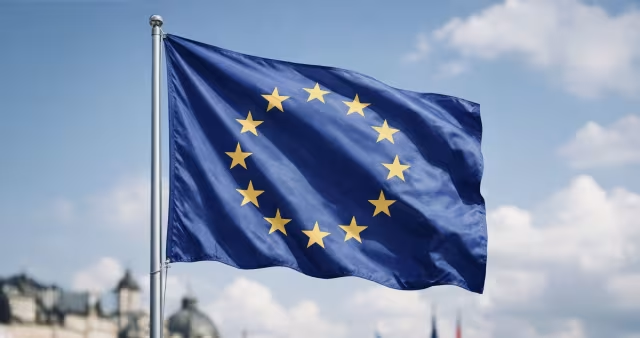
EU Imposes New Sanctions on Iran Over Human Rights Violations
The Council of the European Union has imposed new sanctions on 16 individuals and three entities in Iran, citing their responsibility for serious human rights violations linked to the violent suppression of protests in January 2026.
According to the Council, those targeted played key roles in the crackdown on street demonstrations, which resulted in thousands of civilian casualties. The sanctions notably include Iran’s Deputy Minister of the Interior for Security and Law Enforcement Affairs, along with several commanders of local branches of the Islamic Revolutionary Guard Corps (IRGC) involved in the repression.
The measures also extend to members of Iran’s judiciary accused of prosecuting peaceful protesters, journalists, political critics, and civil society activists, including women’s rights advocates. Some of those listed are alleged to have extracted forced confessions, violated fair trial standards, and issued severe sentences against individuals exercising their fundamental rights.
The head of Iran’s Organization for Prisons and Security and Educational Measures is also included. Under this leadership, documented abuses in prisons include torture, inhumane treatment, arbitrary detention, physical abuse of dissidents and minorities, sexual violence against female detainees, and the use of the death penalty against juvenile offenders.
With these additions, EU restrictive measures over human rights violations in Iran now apply to 263 individuals and 53 entities. Those sanctioned face asset freezes, travel bans within the EU, and prohibitions on EU citizens and companies providing them with funds or economic resources. The EU also maintains a ban on exporting equipment to Iran that could be used for internal repression or telecommunications monitoring.
The sanctions are part of a broader EU framework first introduced in 2011 and renewed annually, most recently extended until April 13, 2026. In recent years, particularly since 2022, the EU has significantly expanded these measures amid growing concerns about the situation in Iran.
Earlier this year, on January 9, 2026, the EU’s High Representative for Foreign Affairs condemned the use of violence, arbitrary detention, and intimidation against demonstrators. She called for the immediate release of individuals detained for exercising their fundamental rights and urged Iranian authorities to uphold freedoms of expression, association, and peaceful assembly, as well as restore full internet access.
The European Union reiterated its support for the Iranian people’s aspirations for a future in which human rights and fundamental freedoms are fully respected and protected.
According to the Council, those targeted played key roles in the crackdown on street demonstrations, which resulted in thousands of civilian casualties. The sanctions notably include Iran’s Deputy Minister of the Interior for Security and Law Enforcement Affairs, along with several commanders of local branches of the Islamic Revolutionary Guard Corps (IRGC) involved in the repression.
The measures also extend to members of Iran’s judiciary accused of prosecuting peaceful protesters, journalists, political critics, and civil society activists, including women’s rights advocates. Some of those listed are alleged to have extracted forced confessions, violated fair trial standards, and issued severe sentences against individuals exercising their fundamental rights.
The head of Iran’s Organization for Prisons and Security and Educational Measures is also included. Under this leadership, documented abuses in prisons include torture, inhumane treatment, arbitrary detention, physical abuse of dissidents and minorities, sexual violence against female detainees, and the use of the death penalty against juvenile offenders.
With these additions, EU restrictive measures over human rights violations in Iran now apply to 263 individuals and 53 entities. Those sanctioned face asset freezes, travel bans within the EU, and prohibitions on EU citizens and companies providing them with funds or economic resources. The EU also maintains a ban on exporting equipment to Iran that could be used for internal repression or telecommunications monitoring.
The sanctions are part of a broader EU framework first introduced in 2011 and renewed annually, most recently extended until April 13, 2026. In recent years, particularly since 2022, the EU has significantly expanded these measures amid growing concerns about the situation in Iran.
Earlier this year, on January 9, 2026, the EU’s High Representative for Foreign Affairs condemned the use of violence, arbitrary detention, and intimidation against demonstrators. She called for the immediate release of individuals detained for exercising their fundamental rights and urged Iranian authorities to uphold freedoms of expression, association, and peaceful assembly, as well as restore full internet access.
The European Union reiterated its support for the Iranian people’s aspirations for a future in which human rights and fundamental freedoms are fully respected and protected.
More headlines

06
Hegseth: U.S. Close to Dominating Iranian Airspace
U.S. forces have begun an operation aimed at securing full control of Iranian airspace, with the mission already underway and expected to conclude within the next few days, according to remarks by Pete Hegseth during a press briefing.
Speaking to reporters, Hegseth said the operation started overnight and is progressing as planned, emphasizing that U.S. forces are working to establish what he described as uncontested control of the skies over Iran.
“Starting last night and expected to be completed within a few days, we will have complete control of Iran’s skies and uncontested airspace,” Hegseth said.
According to the briefing, the effort involves a coordinated military operation designed to suppress or neutralize Iran’s air-defense systems, including radar networks and surface-to-air missile batteries. Such operations are typically intended to allow aircraft to operate freely without facing significant threats from ground-based defenses.
In military terminology, uncontested or controlled airspace means that one side has achieved air superiority, allowing its aircraft to conduct missions with little or no resistance from enemy defenses.
This level of control enables a wide range of military operations, including precision strikes against strategic targets, intelligence and surveillance missions, the protection of allied forces and critical assets, and the continuous monitoring of military movements across the area of operation.
The comments come amid heightened tensions in the region and renewed focus on the strategic importance of air dominance in modern warfare. Control of the skies is widely considered a decisive factor in military operations, as it allows forces to project power while limiting the opponent’s ability to respond.
Hegseth did not provide detailed operational specifics but indicated that the mission is progressing according to plan and is expected to be completed in the coming days, at which point U.S. forces would maintain full operational freedom in Iranian airspace.
Speaking to reporters, Hegseth said the operation started overnight and is progressing as planned, emphasizing that U.S. forces are working to establish what he described as uncontested control of the skies over Iran.
“Starting last night and expected to be completed within a few days, we will have complete control of Iran’s skies and uncontested airspace,” Hegseth said.
According to the briefing, the effort involves a coordinated military operation designed to suppress or neutralize Iran’s air-defense systems, including radar networks and surface-to-air missile batteries. Such operations are typically intended to allow aircraft to operate freely without facing significant threats from ground-based defenses.
In military terminology, uncontested or controlled airspace means that one side has achieved air superiority, allowing its aircraft to conduct missions with little or no resistance from enemy defenses.
This level of control enables a wide range of military operations, including precision strikes against strategic targets, intelligence and surveillance missions, the protection of allied forces and critical assets, and the continuous monitoring of military movements across the area of operation.
The comments come amid heightened tensions in the region and renewed focus on the strategic importance of air dominance in modern warfare. Control of the skies is widely considered a decisive factor in military operations, as it allows forces to project power while limiting the opponent’s ability to respond.
Hegseth did not provide detailed operational specifics but indicated that the mission is progressing according to plan and is expected to be completed in the coming days, at which point U.S. forces would maintain full operational freedom in Iranian airspace.
07
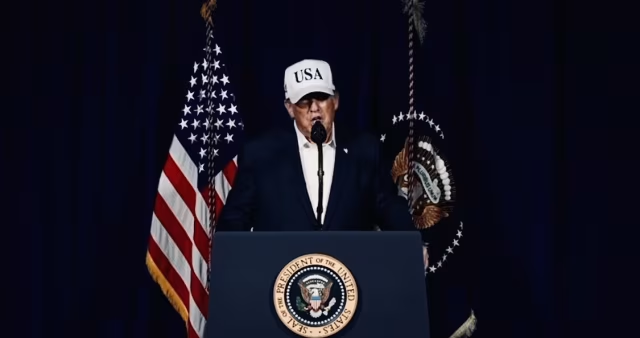
Trump Announces U.S. Military Strikes on Iran
U.S. President Donald Trump announced that the United States has launched major military strikes against Iran, describing the operation as a decisive action aimed at neutralizing threats to American national security and regional stability.
In a televised address, Trump confirmed that U.S. forces carried out what he called large-scale combat operations targeting Iran’s missile infrastructure, naval assets, and military capabilities. He stated that the strikes were intended to prevent Iran from strengthening its offensive capacity and posing a broader threat to the United States and its allies.
Trump framed the operation as a defensive and preventative measure, arguing that diplomatic efforts had failed to curb Iran’s military ambitions. During the speech, Trump issued a direct warning to Iran’s leadership and military forces.
A significant portion of the address was directed toward the Iranian population. Trump called on Iranian citizens to challenge their government, suggesting the military action could open the door for political change inside the country.
The announcement marks a sharp escalation in tensions between Washington and Tehran and raises concerns among international observers about the potential for wider regional conflict. Global leaders are expected to closely monitor developments as reactions from Iran and allied nations continue to emerge.
Further details regarding the scale of the operation and its immediate impact remain limited as the situation develops.
In a televised address, Trump confirmed that U.S. forces carried out what he called large-scale combat operations targeting Iran’s missile infrastructure, naval assets, and military capabilities. He stated that the strikes were intended to prevent Iran from strengthening its offensive capacity and posing a broader threat to the United States and its allies.
Trump framed the operation as a defensive and preventative measure, arguing that diplomatic efforts had failed to curb Iran’s military ambitions. During the speech, Trump issued a direct warning to Iran’s leadership and military forces.
A significant portion of the address was directed toward the Iranian population. Trump called on Iranian citizens to challenge their government, suggesting the military action could open the door for political change inside the country.
The announcement marks a sharp escalation in tensions between Washington and Tehran and raises concerns among international observers about the potential for wider regional conflict. Global leaders are expected to closely monitor developments as reactions from Iran and allied nations continue to emerge.
Further details regarding the scale of the operation and its immediate impact remain limited as the situation develops.

08
Europol: “A new form of ‘remote crime’ could emerge from today’s ‘crime as a service’.”
Europol's latest report on unmanned systems and robotics is a stark warning about how crime is transforming in Europe. The document does not address a distant future, but a reality that is already taking shape and is expected to accelerate significantly in the next decade.
According to Europol, crime is becoming increasingly anonymous, more automated and more physically distant from its perpetrators. This is putting pressure on the traditional law enforcement model, which has historically been built on physical presence, direct identification and territorial control.
Unlike in the past, technology is no longer simply an auxiliary tool for crime. Today, aerial drones, ground robots and autonomous maritime vehicles are becoming active actors in criminal activity. These systems can operate remotely, be programmed for repetitive actions and require very little human intervention.
As a result, crime can be planned and carried out without the physical presence of the perpetrator at the scene. This makes identifying those responsible and prosecuting them much more difficult, increasing the risk of impunity.
Europol stresses that societies are moving from a phase where crime uses technology, to a reality where crime occurs within an automated environment. Smart cities, digital infrastructure, automated logistics and driverless transport create new criminal spaces, where the line between civilian and criminal use is becoming increasingly blurred.
One of the most worrying developments in the report is the emergence of what Europol calls “crime-at-a-distance”, or crime at a distance. This model represents a direct evolution of “crime-as-a-service”, where criminal services are provided in a fragmented and decentralized manner.
According to the report, criminal groups are using cheap, commercial and easily accessible drones for intelligence gathering, smuggling and logistical support. The main advantage is the removal of the perpetrator from the scene of the crime, significantly increasing anonymity and making intervention by the authorities more complicated.
The report also highlights a structural imbalance between crime and the state, where criminal groups are able to quickly and cheaply acquire commercial technologies, without facing legal restrictions or liability.
Meanwhile, law enforcement institutions operate within a slow regulatory framework, accompanied by lengthy procurement procedures, public oversight and the need for cross-border coordination. This constant contrast gives criminal actors a technological advantage, putting the state in a position of reaction rather than prevention.
Europol describes scenarios where criminal networks employ drone operators to provide real-time information on police movements, to support attacks on rival groups or to smuggle drugs and illegal goods across borders. There are cases where independent operators sell their services online, flying drones on behalf of third parties, remotely.
The report also cites concrete examples of the growing sophistication of organized crime, including the seizure of an unmanned narcotics submarine, equipped with a Starlink satellite dish, off the coast of Colombia. This case clearly illustrates that unmanned systems are no longer limited to the air, but are also extending to maritime environments.
While drone smuggling is already widespread, Europol warns that the most serious and long-term threat is intelligence gathering. The ability of these systems to conduct reconnaissance is difficult to detect, can be used continuously and offers strategic value to criminal, terrorist or hybrid actors.
In this sense, drones are no longer simply means of transport, but intelligence platforms that can support long-term and sophisticated operations, creating sustained risks to public security.
The report highlights that these developments have been accelerated by the circulation of technical knowledge, especially in the context of modern conflicts. Russia's war in Ukraine has contributed to the proliferation of drone-building and modification capabilities, while technologies such as 3D printing, cryptocurrencies and encrypted communications have made it easier to evade detection by authorities.
According to Europol, these factors have created an increasingly self-sustaining criminal ecosystem, where technology, anonymity and physical distance combine to directly challenge traditional law enforcement capabilities.
According to Europol, crime is becoming increasingly anonymous, more automated and more physically distant from its perpetrators. This is putting pressure on the traditional law enforcement model, which has historically been built on physical presence, direct identification and territorial control.
Unlike in the past, technology is no longer simply an auxiliary tool for crime. Today, aerial drones, ground robots and autonomous maritime vehicles are becoming active actors in criminal activity. These systems can operate remotely, be programmed for repetitive actions and require very little human intervention.
As a result, crime can be planned and carried out without the physical presence of the perpetrator at the scene. This makes identifying those responsible and prosecuting them much more difficult, increasing the risk of impunity.
Europol stresses that societies are moving from a phase where crime uses technology, to a reality where crime occurs within an automated environment. Smart cities, digital infrastructure, automated logistics and driverless transport create new criminal spaces, where the line between civilian and criminal use is becoming increasingly blurred.
One of the most worrying developments in the report is the emergence of what Europol calls “crime-at-a-distance”, or crime at a distance. This model represents a direct evolution of “crime-as-a-service”, where criminal services are provided in a fragmented and decentralized manner.
According to the report, criminal groups are using cheap, commercial and easily accessible drones for intelligence gathering, smuggling and logistical support. The main advantage is the removal of the perpetrator from the scene of the crime, significantly increasing anonymity and making intervention by the authorities more complicated.
The report also highlights a structural imbalance between crime and the state, where criminal groups are able to quickly and cheaply acquire commercial technologies, without facing legal restrictions or liability.
Meanwhile, law enforcement institutions operate within a slow regulatory framework, accompanied by lengthy procurement procedures, public oversight and the need for cross-border coordination. This constant contrast gives criminal actors a technological advantage, putting the state in a position of reaction rather than prevention.
Europol describes scenarios where criminal networks employ drone operators to provide real-time information on police movements, to support attacks on rival groups or to smuggle drugs and illegal goods across borders. There are cases where independent operators sell their services online, flying drones on behalf of third parties, remotely.
The report also cites concrete examples of the growing sophistication of organized crime, including the seizure of an unmanned narcotics submarine, equipped with a Starlink satellite dish, off the coast of Colombia. This case clearly illustrates that unmanned systems are no longer limited to the air, but are also extending to maritime environments.
While drone smuggling is already widespread, Europol warns that the most serious and long-term threat is intelligence gathering. The ability of these systems to conduct reconnaissance is difficult to detect, can be used continuously and offers strategic value to criminal, terrorist or hybrid actors.
In this sense, drones are no longer simply means of transport, but intelligence platforms that can support long-term and sophisticated operations, creating sustained risks to public security.
The report highlights that these developments have been accelerated by the circulation of technical knowledge, especially in the context of modern conflicts. Russia's war in Ukraine has contributed to the proliferation of drone-building and modification capabilities, while technologies such as 3D printing, cryptocurrencies and encrypted communications have made it easier to evade detection by authorities.
According to Europol, these factors have created an increasingly self-sustaining criminal ecosystem, where technology, anonymity and physical distance combine to directly challenge traditional law enforcement capabilities.

09
Bitcoin in Free Fall
Bitcoin, the largest cryptocurrency and the symbol of the cryptocurrency market, has entered a period of decline, losing a significant part of its value in a short time. Over the past week, its price has fallen by about 9%, while from the historical peak of over $ 126,000 reached in early October 2025, it has currently fallen by more than 25%, stabilizing around the value of $ 95,000.
This sudden and rapid development has caused panic among many investors, especially short-term and speculative ones. The price drop has been driven by a combination of economic, technical and psychological factors.
On the technical side, the fall below the 50-day moving average and other key support areas has raised red flags for algorithmic and institutional traders. Rapid declines below these levels often trigger automated selling that accelerates the price decline.
Liquidity issues have made the situation even more difficult. The outflows from Bitcoin ETFs that were the main factors in the price increase earlier this year have led to a lack of buyers. In a market with low liquidity, even a limited volume of sales can have a large impact on the price.
On the other hand, some analysts argue that this decline is part of a natural correction within a broader upward trend. They point out that Bitcoin has had even bigger declines in the past and has recovered strongly once macroeconomic conditions have improved.
Bitcoin is at a critical juncture. With a 25% decline from its peak and increased sensitivity to traditional markets, investors will need to carefully assess the macroeconomic situation and technical signals before making new decisions.
This sudden and rapid development has caused panic among many investors, especially short-term and speculative ones. The price drop has been driven by a combination of economic, technical and psychological factors.
On the technical side, the fall below the 50-day moving average and other key support areas has raised red flags for algorithmic and institutional traders. Rapid declines below these levels often trigger automated selling that accelerates the price decline.
Liquidity issues have made the situation even more difficult. The outflows from Bitcoin ETFs that were the main factors in the price increase earlier this year have led to a lack of buyers. In a market with low liquidity, even a limited volume of sales can have a large impact on the price.
On the other hand, some analysts argue that this decline is part of a natural correction within a broader upward trend. They point out that Bitcoin has had even bigger declines in the past and has recovered strongly once macroeconomic conditions have improved.
Bitcoin is at a critical juncture. With a 25% decline from its peak and increased sensitivity to traditional markets, investors will need to carefully assess the macroeconomic situation and technical signals before making new decisions.

10
NATO launches Operation Eastern Sentry to strengthen defenses in the east
Brussels, 12 September 2025 — NATO today announced the launch of a new military activity called “Eastern Sentry”, which aims to reinforce the Alliance’s defensive posture along its eastern flank.
At a joint press conference, NATO Secretary General Mark Rutte and the Supreme Allied Commander Europe (SACEUR), General Alexus G. Grynkewich, presented the initiative, emphasizing its strategic importance for ensuring collective preparedness and defense.
“Eastern Sentry” operates under NATO’s long-standing principle that all activities on the eastern flank are defensive, proportionate and fully transparent. These operations aim to build trust and prevent misunderstandings, thereby enhancing stability in the region.
The introduction of this activity reflects NATO's ongoing commitment to adapting to new security challenges. It also complements existing measures such as the reinforcement of NATO air patrols along its eastern flank, which continue in response to the consequences of Russia's aggression against Ukraine.
At a joint press conference, NATO Secretary General Mark Rutte and the Supreme Allied Commander Europe (SACEUR), General Alexus G. Grynkewich, presented the initiative, emphasizing its strategic importance for ensuring collective preparedness and defense.
“Eastern Sentry” operates under NATO’s long-standing principle that all activities on the eastern flank are defensive, proportionate and fully transparent. These operations aim to build trust and prevent misunderstandings, thereby enhancing stability in the region.
The introduction of this activity reflects NATO's ongoing commitment to adapting to new security challenges. It also complements existing measures such as the reinforcement of NATO air patrols along its eastern flank, which continue in response to the consequences of Russia's aggression against Ukraine.