Op-Ed
Monday, October 19, 2026
Opinion · Analysis · Commentary
AI towards superintelligence: What does Musk's timeline imply
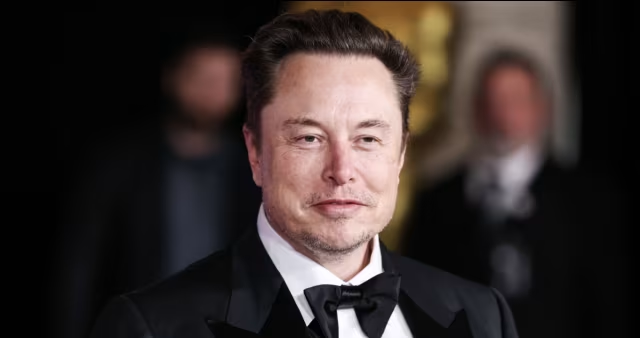
The concept of Artificial General Intelligence (AGI) is described as a key moment in the evolution of artificial intelligence, representing the point when machines can perform any intellectual task that a human can do, with the same or even higher level of ability. This discussion has gained new attention after a post by Elon Musk on the X platform, where he presented a rapid progression of AI models, suggesting that Grok 5.0 could achieve AGI, while Grok 6.0 could move into Artificial Superintelligence (ASI), a phase where AI surpasses human intelligence in almost every aspect.
In his post, Musk outlined a kind of simplified “timeline”, where the capabilities of the models increase from version to version, moving from trillions of parameters in versions 4.6 to 4.8, before leaving version 4.9 unclear and then marking version 5.0 as the point of achieving AGI. He also mentioned version 6.0 as the phase of ASI and even alluded to another advanced level called “ASI2” in version 7.0. The tone of the post suggests a mix between prediction and humor, but at the same time reflects the growing narrative that AI development is accelerating significantly.
Different from current AI systems, which are specialized for specific tasks, AGI would be characterized by the ability for general reasoning, adaptation, and learning in different fields without the need for specific training for each of them. This would constitute a fundamental transformation in the way machines interact with the world, moving from limited tools to autonomous systems that can solve problems independently.
Looking further ahead, the concept of ASI brings even deeper implications. A system that surpasses human intelligence in all fields from science and engineering to creativity and strategy could revolutionize entire industries and social structures. However, these projections remain highly speculative, as significant technical, ethical, and theoretical challenges still stand before their realization.
Although Musk's “timeline” does not constitute a confirmed plan, it highlights the intensity of the current progress in the field of artificial intelligence and the growing seriousness with which AGI and ASI are being discussed. Regardless of whether these phases will be reached within years or decades, the very discussion signals a turning point in how humanity views the future of intelligence and technology.
In his post, Musk outlined a kind of simplified “timeline”, where the capabilities of the models increase from version to version, moving from trillions of parameters in versions 4.6 to 4.8, before leaving version 4.9 unclear and then marking version 5.0 as the point of achieving AGI. He also mentioned version 6.0 as the phase of ASI and even alluded to another advanced level called “ASI2” in version 7.0. The tone of the post suggests a mix between prediction and humor, but at the same time reflects the growing narrative that AI development is accelerating significantly.
Different from current AI systems, which are specialized for specific tasks, AGI would be characterized by the ability for general reasoning, adaptation, and learning in different fields without the need for specific training for each of them. This would constitute a fundamental transformation in the way machines interact with the world, moving from limited tools to autonomous systems that can solve problems independently.
Looking further ahead, the concept of ASI brings even deeper implications. A system that surpasses human intelligence in all fields from science and engineering to creativity and strategy could revolutionize entire industries and social structures. However, these projections remain highly speculative, as significant technical, ethical, and theoretical challenges still stand before their realization.
Although Musk's “timeline” does not constitute a confirmed plan, it highlights the intensity of the current progress in the field of artificial intelligence and the growing seriousness with which AGI and ASI are being discussed. Regardless of whether these phases will be reached within years or decades, the very discussion signals a turning point in how humanity views the future of intelligence and technology.
Ad space

Record Registrations of the Diaspora: A Sign of Fewer Travels to Kosovo?
Kosovo is marking a significant increase in voter registrations from the diaspora for the June 2026 parliamentary elections, with unofficial figures suggesting that the number of registrations may have reached nearly 95,000.
This number represents a noticeable increase compared to the extraordinary parliamentary elections of December 2025, when around 84,000 applications for voting outside Kosovo were submitted.
One of the main factors that may have influenced this increase is the timing of the elections.
Unlike the December 2025 elections, which were held during the year-end holiday period, a time when many emigrants traditionally travel to Kosovo for family visits, the June elections are taking place outside the vacation season.
For many families in the diaspora, traveling during June is noticeably more difficult due to work and school commitments. Parents with children in school often avoid long trips during the academic year, while many workers in Western countries find it difficult to secure leave from employers outside planned vacation periods.
The duration of the trip is also considered a significant factor. For families traveling by car from Germany or Switzerland, the road to Kosovo can take up to two days in one direction, implying a loss of several working days and additional expenses. Meanwhile, air travel often involves airport transfers and loss of working days.
Due to these logistical and economic factors, many members of the diaspora seem to be choosing to vote from abroad through mail or diplomatic representations, rather than physically traveling to Kosovo.
Analysts estimate that this increase in registrations may also reflect a lower physical participation of the diaspora in Kosovo during the election period. Unlike the year-end elections, when many emigrants traveled to Kosovo to vote within the country, the June elections may have shifted part of this electorate towards distance voting, due to professional, school, and travel costs.
The Central Election Commission has not yet published the final certified figure of registrations, as the process continues. However, if the current figures are confirmed, the June 2026 elections may mark the largest-ever distant participation of the diaspora in Kosovo's electoral history.
Diaspora votes have become increasingly important in Kosovo's political scene over the past decade, often playing a decisive role in tight electoral races.
This number represents a noticeable increase compared to the extraordinary parliamentary elections of December 2025, when around 84,000 applications for voting outside Kosovo were submitted.
One of the main factors that may have influenced this increase is the timing of the elections.
Unlike the December 2025 elections, which were held during the year-end holiday period, a time when many emigrants traditionally travel to Kosovo for family visits, the June elections are taking place outside the vacation season.
For many families in the diaspora, traveling during June is noticeably more difficult due to work and school commitments. Parents with children in school often avoid long trips during the academic year, while many workers in Western countries find it difficult to secure leave from employers outside planned vacation periods.
The duration of the trip is also considered a significant factor. For families traveling by car from Germany or Switzerland, the road to Kosovo can take up to two days in one direction, implying a loss of several working days and additional expenses. Meanwhile, air travel often involves airport transfers and loss of working days.
Due to these logistical and economic factors, many members of the diaspora seem to be choosing to vote from abroad through mail or diplomatic representations, rather than physically traveling to Kosovo.
Analysts estimate that this increase in registrations may also reflect a lower physical participation of the diaspora in Kosovo during the election period. Unlike the year-end elections, when many emigrants traveled to Kosovo to vote within the country, the June elections may have shifted part of this electorate towards distance voting, due to professional, school, and travel costs.
The Central Election Commission has not yet published the final certified figure of registrations, as the process continues. However, if the current figures are confirmed, the June 2026 elections may mark the largest-ever distant participation of the diaspora in Kosovo's electoral history.
Diaspora votes have become increasingly important in Kosovo's political scene over the past decade, often playing a decisive role in tight electoral races.
In this section

Op-Ed
The Paradox of Growth: When the Economy Expands Without Developing
The growth of Gross Domestic Product (GDP) is often considered the main indicator of a country's economic progress. However, economics experts emphasize that GDP growth does not automatically translate into economic development, especially when it is not accompanied by industrial development.
GDP measures the total value of goods and services produced in an economy, but it does not necessarily indicate whether the standard of living, productivity, technological capabilities, or the quality of workplaces are improving. Economic development encompasses a broader range of factors, such as industrialization, innovation, education, infrastructure, health, and citizen well-being.
One of the main reasons why economic growth does not always turn into development is that it can come from sectors that create few long-term capacities. Activities in real estate, financial services, remittances, or tourism can increase GDP, but not necessarily strengthen the country's economic base.
On the other hand, economic development implies strengthening capacities in various sectors of the economy, including manufacturing, agriculture, technology, energy, logistics, and high-value-added services. It is characterized by increased productivity, technological advancement, diversification of economic activity, development of professional skills, and creation of competitive products and services.
These factors are considered the foundation of sustainable economic development, as they increase the economy's ability to generate value, innovation, and long-term well-being.
An economy can record high growth rates for years, but remain dependent on imports, foreign technology, and non-productive sectors. In such cases, economic growth may increase income, but it does not bring about the structural transformation needed for long-term development.
Indicators of industrial development include the growth of value added in production, improvement of productivity, high-tech exports, investments in research and development, expansion of the qualified workforce, strengthening of domestic supply chains, and increase in innovative capacity. These elements show whether the economy is gradually transforming towards higher-value and more competitive activities.
In essence, GDP growth indicates that economic activity has expanded, while economic development indicates whether a society is building productive capacities, creating quality jobs, and improving the well-being of its citizens. Therefore, an economy can grow without developing, while sustainable development requires much more than just economic growth figures.
GDP measures the total value of goods and services produced in an economy, but it does not necessarily indicate whether the standard of living, productivity, technological capabilities, or the quality of workplaces are improving. Economic development encompasses a broader range of factors, such as industrialization, innovation, education, infrastructure, health, and citizen well-being.
One of the main reasons why economic growth does not always turn into development is that it can come from sectors that create few long-term capacities. Activities in real estate, financial services, remittances, or tourism can increase GDP, but not necessarily strengthen the country's economic base.
On the other hand, economic development implies strengthening capacities in various sectors of the economy, including manufacturing, agriculture, technology, energy, logistics, and high-value-added services. It is characterized by increased productivity, technological advancement, diversification of economic activity, development of professional skills, and creation of competitive products and services.
These factors are considered the foundation of sustainable economic development, as they increase the economy's ability to generate value, innovation, and long-term well-being.
An economy can record high growth rates for years, but remain dependent on imports, foreign technology, and non-productive sectors. In such cases, economic growth may increase income, but it does not bring about the structural transformation needed for long-term development.
Indicators of industrial development include the growth of value added in production, improvement of productivity, high-tech exports, investments in research and development, expansion of the qualified workforce, strengthening of domestic supply chains, and increase in innovative capacity. These elements show whether the economy is gradually transforming towards higher-value and more competitive activities.
In essence, GDP growth indicates that economic activity has expanded, while economic development indicates whether a society is building productive capacities, creating quality jobs, and improving the well-being of its citizens. Therefore, an economy can grow without developing, while sustainable development requires much more than just economic growth figures.
Op-Ed
NATO's Balance for the First Year After Kosovo's Liberation
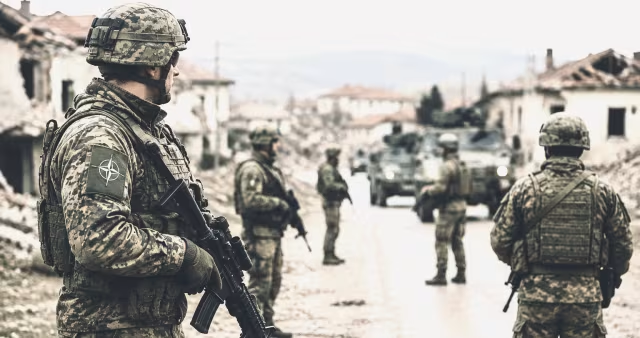
A year after the end of the war in Kosovo, NATO assessed that its military intervention had achieved its main objectives, enabling the return of refugees, the withdrawal of Serbian forces, and the establishment of an international security force. However, according to a report published in 2000 by the former NATO Secretary General, Lord Robertson, the challenges for building a stable and multi-ethnic Kosovo remained significant.
The report, titled "Kosovo One Year On: Achievements and Challenges", describes the period prior to the intervention as a growing humanitarian crisis. According to the cited data, by the end of 1998 around 350,000 people had been displaced from their homes, while over 50,000 were living in difficult conditions in the open. NATO argues that diplomatic efforts to prevent military intervention continued for months, but failed after the Yugoslav authorities' refusal to accept the Rambouillet agreement.
Operation Allied Force, launched on March 24, 1999, lasted 78 days. During the air campaign, NATO aircraft conducted over 38,000 combat missions, including 10,484 air strikes. According to the report, the goal was to stop the repression of Kosovo Albanians, to withdraw Serbian forces, and to create conditions for the return of refugees.
One of the most significant results documented by NATO was the massive return of the displaced population. The report highlights that over 1.3 million refugees and displaced persons returned to Kosovo within the first year after the war. Of these, 810,000 returned from Albania, North Macedonia, and other countries, while 550,000 were displaced within Kosovo itself.
Towards reconstruction, KFOR and international organizations cleared 16,000 homes, 1,165 schools, and almost 2,000 kilometers of roads from mines and unexploded ordnance. Furthermore, over one million roofs, 18,000 heaters, and 4,000 trucks with firewood were distributed, while over 43,000 citizens received medical treatment at KFOR facilities.
The report also notes a significant improvement in the security situation. The number of killings had dropped from over 50 cases per week in June 1999 to around five cases per week a year later. At that time, around 40,000 KFOR troops were deployed in Kosovo and the region, conducting up to 750 patrols per day and securing hundreds of strategic locations.
However, NATO warned that peace remained fragile. The security of minority communities, particularly Kosovo Serbs, continued to be a challenge. Over half of KFOR personnel were engaged in protecting minority communities, while the lack of international police and the poor functioning of the justice system were considered obstacles to long-term stabilization.
In conclusion, Lord Robertson described NATO's intervention as a necessary act to prevent a larger humanitarian catastrophe and to create conditions for the reconstruction of Kosovo. However, he warned that healing the wounds of war and building a democratic and multi-ethnic society would require years of commitment from Kosovo and the international community.
The report, titled "Kosovo One Year On: Achievements and Challenges", describes the period prior to the intervention as a growing humanitarian crisis. According to the cited data, by the end of 1998 around 350,000 people had been displaced from their homes, while over 50,000 were living in difficult conditions in the open. NATO argues that diplomatic efforts to prevent military intervention continued for months, but failed after the Yugoslav authorities' refusal to accept the Rambouillet agreement.
Operation Allied Force, launched on March 24, 1999, lasted 78 days. During the air campaign, NATO aircraft conducted over 38,000 combat missions, including 10,484 air strikes. According to the report, the goal was to stop the repression of Kosovo Albanians, to withdraw Serbian forces, and to create conditions for the return of refugees.
One of the most significant results documented by NATO was the massive return of the displaced population. The report highlights that over 1.3 million refugees and displaced persons returned to Kosovo within the first year after the war. Of these, 810,000 returned from Albania, North Macedonia, and other countries, while 550,000 were displaced within Kosovo itself.
Towards reconstruction, KFOR and international organizations cleared 16,000 homes, 1,165 schools, and almost 2,000 kilometers of roads from mines and unexploded ordnance. Furthermore, over one million roofs, 18,000 heaters, and 4,000 trucks with firewood were distributed, while over 43,000 citizens received medical treatment at KFOR facilities.
The report also notes a significant improvement in the security situation. The number of killings had dropped from over 50 cases per week in June 1999 to around five cases per week a year later. At that time, around 40,000 KFOR troops were deployed in Kosovo and the region, conducting up to 750 patrols per day and securing hundreds of strategic locations.
However, NATO warned that peace remained fragile. The security of minority communities, particularly Kosovo Serbs, continued to be a challenge. Over half of KFOR personnel were engaged in protecting minority communities, while the lack of international police and the poor functioning of the justice system were considered obstacles to long-term stabilization.
In conclusion, Lord Robertson described NATO's intervention as a necessary act to prevent a larger humanitarian catastrophe and to create conditions for the reconstruction of Kosovo. However, he warned that healing the wounds of war and building a democratic and multi-ethnic society would require years of commitment from Kosovo and the international community.

Op-Ed
LVV Leads with 42.91%, but the Race for Second Place Remains Open
LVV Leads with 42.91%, but the Race for Second Place Remains Open
With all 2,498 polling stations processed, Kosovo’s preliminary parliamentary election results show that the Self-Determination Movement (LVV) remains the largest political force in the country, although with a significantly lower result compared to the parliamentary elections of December 2025.
According to the latest data, LVV has secured 299,152 votes, or 42.91 percent of the vote, remaining the leading party but recording the largest decline compared to the December 28, 2025 elections, when it received 49.34 percent. The Democratic Party of Kosovo (PDK) ranks second with 147,325 votes, or 21.13 percent, remaining largely unchanged from its 20.98 percent result in 2025.
The Democratic League of Kosovo (LDK) has posted the strongest growth, rising to 17.59 percent from 13.57 percent, while the Alliance for the Future of Kosovo (AAK) has increased from 5.66 percent to 7.16 percent. Meanwhile, the Serb List has secured 43,071 votes, representing 6.18 percent of the votes counted so far.
Based solely on the votes counted within Kosovo, the current composition of the Assembly would be projected approximately as follows: • LVV: 43–45 seats • PDK: 21–22 seats • LDK: 18–19 seats • AAK: 7–8 seats
However, the final outcome remains open due to diaspora votes, which have historically favored LVV more strongly than voters inside Kosovo. In previous elections, support for LVV among the diaspora has been estimated at over 60 percent.
In a scenario where President Vjosa Osmani exerts a strong influence on diaspora voting patterns, LDK could secure as much as 36 percent of the diaspora vote, while LVV’s share could decline to around 44 percent.
Under such a scenario, the final nationwide result could approach: • LVV: 47–48% • PDK: around 22% • LDK: 22–23% • AAK: 7–8%
The corresponding seat distribution could be: • LVV: 48 seats • PDK: 21–22 seats • LDK: 22 seats • AAK: 8 seats
Such a result would significantly narrow the gap between PDK and LDK and could create a very close contest for the position of the second-largest party in the Assembly.
The election appears to be telling two parallel stories. On one hand, LVV has experienced a decline compared to its 2025 result. On the other hand, LDK has recorded the strongest growth among the major Albanian parties and could further strengthen its position if diaspora votes prove more favorable than in previous electoral cycles.
The final composition of the Kosovo Assembly will depend on the official counting of diaspora votes, conditional ballots, and the final allocation of mandates. While LVV is expected to remain the largest parliamentary group, the race for second place and the broader political balance remain very much open.
With all 2,498 polling stations processed, Kosovo’s preliminary parliamentary election results show that the Self-Determination Movement (LVV) remains the largest political force in the country, although with a significantly lower result compared to the parliamentary elections of December 2025.
According to the latest data, LVV has secured 299,152 votes, or 42.91 percent of the vote, remaining the leading party but recording the largest decline compared to the December 28, 2025 elections, when it received 49.34 percent. The Democratic Party of Kosovo (PDK) ranks second with 147,325 votes, or 21.13 percent, remaining largely unchanged from its 20.98 percent result in 2025.
The Democratic League of Kosovo (LDK) has posted the strongest growth, rising to 17.59 percent from 13.57 percent, while the Alliance for the Future of Kosovo (AAK) has increased from 5.66 percent to 7.16 percent. Meanwhile, the Serb List has secured 43,071 votes, representing 6.18 percent of the votes counted so far.
Based solely on the votes counted within Kosovo, the current composition of the Assembly would be projected approximately as follows: • LVV: 43–45 seats • PDK: 21–22 seats • LDK: 18–19 seats • AAK: 7–8 seats
However, the final outcome remains open due to diaspora votes, which have historically favored LVV more strongly than voters inside Kosovo. In previous elections, support for LVV among the diaspora has been estimated at over 60 percent.
In a scenario where President Vjosa Osmani exerts a strong influence on diaspora voting patterns, LDK could secure as much as 36 percent of the diaspora vote, while LVV’s share could decline to around 44 percent.
Under such a scenario, the final nationwide result could approach: • LVV: 47–48% • PDK: around 22% • LDK: 22–23% • AAK: 7–8%
The corresponding seat distribution could be: • LVV: 48 seats • PDK: 21–22 seats • LDK: 22 seats • AAK: 8 seats
Such a result would significantly narrow the gap between PDK and LDK and could create a very close contest for the position of the second-largest party in the Assembly.
The election appears to be telling two parallel stories. On one hand, LVV has experienced a decline compared to its 2025 result. On the other hand, LDK has recorded the strongest growth among the major Albanian parties and could further strengthen its position if diaspora votes prove more favorable than in previous electoral cycles.
The final composition of the Kosovo Assembly will depend on the official counting of diaspora votes, conditional ballots, and the final allocation of mandates. While LVV is expected to remain the largest parliamentary group, the race for second place and the broader political balance remain very much open.
More headlines

06
The Letter That Marked the Beginning of the End of Nazi Occupation in Europe
In the early hours of June 6, 1944, as thousands of Allied ships sailed toward the shores of Normandy and tens of thousands of soldiers awaited the order to land in Nazi-occupied France, Supreme Allied Commander General Dwight D. Eisenhower sent them a message that would become part of history.
Addressed to the “Soldiers, Sailors, and Airmen of the Allied Expeditionary Force,” the letter was brief but carried the weight of the moment. Operation Overlord, the invasion of Normandy, would become the largest amphibious assault in history and one of the most dangerous military operations of World War II.
“The eyes of the world are upon you,” Eisenhower wrote in the opening line of his message. Across the English Channel, millions of people living under Nazi occupation hoped that the Allied forces would succeed in opening a new front against Germany. For the American commander, the men preparing to land in Normandy were fighting not only for a military victory, but for the fate of an entire continent.
He reminded the troops that “the hopes and prayers of liberty-loving people everywhere march with you,” linking their mission to the aspirations of millions who lived under occupation and dictatorship.
In the letter, Eisenhower described the operation as part of the effort to bring about “the destruction of the German war machine” and “the elimination of Nazi tyranny over the oppressed peoples of Europe.” He called the invasion “a Great Crusade,” a phrase that reflected his belief that the battle was about more than territory or military strategy—it was about freedom and the future of Europe.
Yet the message was not merely inspirational. Eisenhower did not attempt to hide the dangers awaiting the troops. “Your task will not be an easy one,” he warned. German forces had spent years constructing extensive fortifications along the French coast, and the Allied commander knew that the invasion would come at a heavy cost.
“Your enemy is well trained, well equipped and battle-hardened,” he wrote. “He will fight savagely.” It was a realistic assessment of the challenge that awaited Allied forces once the ramps of the landing craft opened on the beaches of Normandy.
But the letter also carried a sense of optimism. Eisenhower believed that the decisive moment of the war had arrived. “The tide has turned,” he declared, arguing that Allied offensives on other fronts and the industrial strength of the Allied nations had begun to shift the balance of the conflict.
One of the most famous passages of the message remains his call for absolute determination: “We will accept nothing less than full Victory.” The phrase would become a symbol of Allied resolve during the crucial months that followed.
The message concluded with a call for faith and a simple wish: “Good luck.” Eisenhower also asked the troops to seek God’s blessing upon what he described as “this great and noble undertaking.”
Only hours after the letter was distributed, approximately 156,000 Allied troops landed on five beaches in Normandy. The fighting was fierce and casualties were heavy, but the operation achieved its primary objective: establishing a foothold in France from which the Allies would begin the liberation of Western Europe.
Today, more than eight decades later, Eisenhower’s letter remains one of the most famous documents of World War II. It offers a rare glimpse into the mindset of a commander sending tens of thousands of men into a mission with historic consequences. In just a few paragraphs, the message combined warning, realism, hope, and determination—qualities that continue to make it one of the most inspiring wartime documents of the twentieth century.
Addressed to the “Soldiers, Sailors, and Airmen of the Allied Expeditionary Force,” the letter was brief but carried the weight of the moment. Operation Overlord, the invasion of Normandy, would become the largest amphibious assault in history and one of the most dangerous military operations of World War II.
“The eyes of the world are upon you,” Eisenhower wrote in the opening line of his message. Across the English Channel, millions of people living under Nazi occupation hoped that the Allied forces would succeed in opening a new front against Germany. For the American commander, the men preparing to land in Normandy were fighting not only for a military victory, but for the fate of an entire continent.
He reminded the troops that “the hopes and prayers of liberty-loving people everywhere march with you,” linking their mission to the aspirations of millions who lived under occupation and dictatorship.
In the letter, Eisenhower described the operation as part of the effort to bring about “the destruction of the German war machine” and “the elimination of Nazi tyranny over the oppressed peoples of Europe.” He called the invasion “a Great Crusade,” a phrase that reflected his belief that the battle was about more than territory or military strategy—it was about freedom and the future of Europe.
Yet the message was not merely inspirational. Eisenhower did not attempt to hide the dangers awaiting the troops. “Your task will not be an easy one,” he warned. German forces had spent years constructing extensive fortifications along the French coast, and the Allied commander knew that the invasion would come at a heavy cost.
“Your enemy is well trained, well equipped and battle-hardened,” he wrote. “He will fight savagely.” It was a realistic assessment of the challenge that awaited Allied forces once the ramps of the landing craft opened on the beaches of Normandy.
But the letter also carried a sense of optimism. Eisenhower believed that the decisive moment of the war had arrived. “The tide has turned,” he declared, arguing that Allied offensives on other fronts and the industrial strength of the Allied nations had begun to shift the balance of the conflict.
One of the most famous passages of the message remains his call for absolute determination: “We will accept nothing less than full Victory.” The phrase would become a symbol of Allied resolve during the crucial months that followed.
The message concluded with a call for faith and a simple wish: “Good luck.” Eisenhower also asked the troops to seek God’s blessing upon what he described as “this great and noble undertaking.”
Only hours after the letter was distributed, approximately 156,000 Allied troops landed on five beaches in Normandy. The fighting was fierce and casualties were heavy, but the operation achieved its primary objective: establishing a foothold in France from which the Allies would begin the liberation of Western Europe.
Today, more than eight decades later, Eisenhower’s letter remains one of the most famous documents of World War II. It offers a rare glimpse into the mindset of a commander sending tens of thousands of men into a mission with historic consequences. In just a few paragraphs, the message combined warning, realism, hope, and determination—qualities that continue to make it one of the most inspiring wartime documents of the twentieth century.

07
Is a Gendarmerie a Constitutional Challenge?
The idea of creating a gendarmerie or an intermediate military-police force in Kosovo raises a legal and constitutional debate within the state’s security architecture. Kosovo already possesses the Kosovo Security Force and the Kosovo Police.
Could the state legally establish a third armed structure positioned between the army and the police? At the center of the debate lies a fundamental constitutional question: does Kosovo’s constitutional order allow the creation of an additional armed force?
Kosovo’s Constitution already clearly defines the country’s main security institutions. Article 126 defines the KSF as the national security force of the Republic of Kosovo, operating under democratic civilian control and with the President serving as Commander-in-Chief. Meanwhile, Article 128 defines the Kosovo Police as the institution responsible for public order and internal security.
The debate becomes even more complex when analyzing the type of competencies such a gendarmerie could possess. If such a force were granted broad police powers such as arrests, criminal investigations, riot control, or internal security operations — competencies that constitutionally already belong to the Kosovo Police — serious legal questions would arise. On the other hand, if it were structured as an armed force with a military character outside the KSF, questions would emerge regarding overlap with national defense competencies already delegated to the KSF.
The Constitution does not explicitly prohibit the creation of specialized security formations. Many democratic states maintain functioning gendarmerie forces operating legally under parliamentary oversight. Examples include the French Gendarmerie and the Italian Carabinieri, both of which combine military organization with certain internal security competencies.
Such a new force could also rely on the legal evolution and gradual transformation of the Kosovo Security Force, whose competencies have expanded over the years beyond its original mandate of civil emergency response and crisis management.
However, the constitutional vulnerability of such a force would largely depend on how it is legally structured.
A unit integrated within the Kosovo Police as a special intervention force would likely face fewer constitutional challenges, since it would remain within an institution already recognized by the Constitution. Likewise, a military police or territorial protection command established within the KSF would be easier to justify legally as part of the existing defense architecture.
On the other hand, the creation of a completely independent force could trigger a constitutional challenge. Any autonomous armed structure operating outside the existing legal and institutional framework could be interpreted as a violation of constitutional principles of legality, institutional hierarchy, and the balance of powers within the security sector.
Beyond the domestic legal aspect, the issue would also carry significant international implications. NATO and Kosovo Force continue to maintain the primary military presence in Kosovo within the post-war order established under UN Security Council Resolution 1244. Any move perceived as rapid militarization or the creation of new armed formations could generate international political concern, particularly in the context of tensions in northern Kosovo.
In practice, if Kosovo were to develop something resembling a gendarmerie, it would likely need to emerge gradually through the expansion of existing structures rather than through the creation of an entirely new force. Legally and politically, integration within existing constitutional institutions would be far more defensible than establishing an armed organization outside the current security architecture.
A force with broad security competencies and an intermediate military-police character could potentially require constitutional amendments. Such a process would be politically and legally complex, since constitutional amendments in Kosovo require not only a qualified parliamentary majority, but also the support of representatives of non-majority communities, making consensus on sensitive security matters particularly difficult to achieve.
For this reason, the legal question is not simply whether Kosovo can create a gendarmerie, but how such a force could be structured in accordance with the constitutional order and the existing state security architecture.
Could the state legally establish a third armed structure positioned between the army and the police? At the center of the debate lies a fundamental constitutional question: does Kosovo’s constitutional order allow the creation of an additional armed force?
Kosovo’s Constitution already clearly defines the country’s main security institutions. Article 126 defines the KSF as the national security force of the Republic of Kosovo, operating under democratic civilian control and with the President serving as Commander-in-Chief. Meanwhile, Article 128 defines the Kosovo Police as the institution responsible for public order and internal security.
The debate becomes even more complex when analyzing the type of competencies such a gendarmerie could possess. If such a force were granted broad police powers such as arrests, criminal investigations, riot control, or internal security operations — competencies that constitutionally already belong to the Kosovo Police — serious legal questions would arise. On the other hand, if it were structured as an armed force with a military character outside the KSF, questions would emerge regarding overlap with national defense competencies already delegated to the KSF.
The Constitution does not explicitly prohibit the creation of specialized security formations. Many democratic states maintain functioning gendarmerie forces operating legally under parliamentary oversight. Examples include the French Gendarmerie and the Italian Carabinieri, both of which combine military organization with certain internal security competencies.
Such a new force could also rely on the legal evolution and gradual transformation of the Kosovo Security Force, whose competencies have expanded over the years beyond its original mandate of civil emergency response and crisis management.
However, the constitutional vulnerability of such a force would largely depend on how it is legally structured.
A unit integrated within the Kosovo Police as a special intervention force would likely face fewer constitutional challenges, since it would remain within an institution already recognized by the Constitution. Likewise, a military police or territorial protection command established within the KSF would be easier to justify legally as part of the existing defense architecture.
On the other hand, the creation of a completely independent force could trigger a constitutional challenge. Any autonomous armed structure operating outside the existing legal and institutional framework could be interpreted as a violation of constitutional principles of legality, institutional hierarchy, and the balance of powers within the security sector.
Beyond the domestic legal aspect, the issue would also carry significant international implications. NATO and Kosovo Force continue to maintain the primary military presence in Kosovo within the post-war order established under UN Security Council Resolution 1244. Any move perceived as rapid militarization or the creation of new armed formations could generate international political concern, particularly in the context of tensions in northern Kosovo.
In practice, if Kosovo were to develop something resembling a gendarmerie, it would likely need to emerge gradually through the expansion of existing structures rather than through the creation of an entirely new force. Legally and politically, integration within existing constitutional institutions would be far more defensible than establishing an armed organization outside the current security architecture.
A force with broad security competencies and an intermediate military-police character could potentially require constitutional amendments. Such a process would be politically and legally complex, since constitutional amendments in Kosovo require not only a qualified parliamentary majority, but also the support of representatives of non-majority communities, making consensus on sensitive security matters particularly difficult to achieve.
For this reason, the legal question is not simply whether Kosovo can create a gendarmerie, but how such a force could be structured in accordance with the constitutional order and the existing state security architecture.

08
Is Osmani the “Queen” who will decide the election outcome?
Former President of Kosovo, Vjosa Osmani, is once again emerging at the center of political developments in Kosovo, as the country enters a new phase of institutional and party reconfiguration, on the eve of general elections and following the end of her presidential mandate. Recent political movements and intensified contacts with the Democratic League of Kosovo have brought renewed focus on her future role in the political landscape.
This new potential positioning is seen as an attempt to capitalize on her institutional profile and international support. At the same time, current developments signal a broader reshaping of the political scene.
From LDK to Vetëvendosje
Osmani began her political career in the Democratic League of Kosovo (LDK), where she became one of the party’s most voted and reform-oriented figures. However, clashes with the party’s former leadership, led by Isa Mustafa, led to a gradual split during 2020.
She opposed LDK’s decisions on governing coalitions and was later expelled from its leadership structures. Ahead of the 2021 elections, Osmani aligned herself with Vetëvendosje and Albin Kurti, running on their list and securing one of the strongest electoral results in the country.
In April 2021, Osmani was elected President with the support of the parliamentary majority led by Vetëvendosje. Although LDK did not officially support her candidacy, it participated in the process to ensure quorum and enable her election. Her appointment marked a clear political break from LDK and a strong alignment with Kurti’s government, even though their roles remained institutionally separate.
Relationship with Kurti
Tensions between Vjosa Osmani and Albin Kurti have surfaced at various moments, but their definitive political split became evident during the final parliamentary session within the constitutional deadlines for electing the president. Kurti refused to support a second mandate for Osmani, despite LDK’s willingness—similar to the first time—to secure the necessary votes, aiming to avoid an institutional crisis and early elections.
Osmani is widely perceived as more aligned with the positions and messaging of Western partners, particularly the European Union and the United States, reflecting a more diplomatic and coordinated approach to foreign policy, as well as a notable closeness with the U.S. administration. This has also been reflected in symbolic gestures toward American leaders, including a publicly noted moment involving Donald Trump. On the other hand, Kurti often follows a more pronounced sovereigntist line.
Alignment with LDK and Electoral Impact
The leader of the Democratic League of Kosovo, Lumir Abdixhiku, has sent strong signals of rapprochement with Osmani. He has mentioned her as a preferred option for president, stating that “we will soon come with good news… part of LDK’s major comeback,” a message suggesting that LDK sees Osmani as a significant electoral and political asset. Her potential return is viewed as part of a broader strategy to reposition and strengthen the party.
In this context, expectations within LDK are that Osmani’s engagement could also bring back a considerable portion of the electorate she had drawn with her during her alignment with Vetëvendosje—an electorate that, according to estimates, represented nearly half of LDK’s traditional support at the time.
She is expected to lead LDK’s electoral list in a new political coalition, which could be formalized in the coming days. These developments point to a reconfiguration of the political landscape, where her role is seen as key for electoral representation and for LDK’s efforts to stage a strong political comeback.
This new potential positioning is seen as an attempt to capitalize on her institutional profile and international support. At the same time, current developments signal a broader reshaping of the political scene.
From LDK to Vetëvendosje
Osmani began her political career in the Democratic League of Kosovo (LDK), where she became one of the party’s most voted and reform-oriented figures. However, clashes with the party’s former leadership, led by Isa Mustafa, led to a gradual split during 2020.
She opposed LDK’s decisions on governing coalitions and was later expelled from its leadership structures. Ahead of the 2021 elections, Osmani aligned herself with Vetëvendosje and Albin Kurti, running on their list and securing one of the strongest electoral results in the country.
In April 2021, Osmani was elected President with the support of the parliamentary majority led by Vetëvendosje. Although LDK did not officially support her candidacy, it participated in the process to ensure quorum and enable her election. Her appointment marked a clear political break from LDK and a strong alignment with Kurti’s government, even though their roles remained institutionally separate.
Relationship with Kurti
Tensions between Vjosa Osmani and Albin Kurti have surfaced at various moments, but their definitive political split became evident during the final parliamentary session within the constitutional deadlines for electing the president. Kurti refused to support a second mandate for Osmani, despite LDK’s willingness—similar to the first time—to secure the necessary votes, aiming to avoid an institutional crisis and early elections.
Osmani is widely perceived as more aligned with the positions and messaging of Western partners, particularly the European Union and the United States, reflecting a more diplomatic and coordinated approach to foreign policy, as well as a notable closeness with the U.S. administration. This has also been reflected in symbolic gestures toward American leaders, including a publicly noted moment involving Donald Trump. On the other hand, Kurti often follows a more pronounced sovereigntist line.
Alignment with LDK and Electoral Impact
The leader of the Democratic League of Kosovo, Lumir Abdixhiku, has sent strong signals of rapprochement with Osmani. He has mentioned her as a preferred option for president, stating that “we will soon come with good news… part of LDK’s major comeback,” a message suggesting that LDK sees Osmani as a significant electoral and political asset. Her potential return is viewed as part of a broader strategy to reposition and strengthen the party.
In this context, expectations within LDK are that Osmani’s engagement could also bring back a considerable portion of the electorate she had drawn with her during her alignment with Vetëvendosje—an electorate that, according to estimates, represented nearly half of LDK’s traditional support at the time.
She is expected to lead LDK’s electoral list in a new political coalition, which could be formalized in the coming days. These developments point to a reconfiguration of the political landscape, where her role is seen as key for electoral representation and for LDK’s efforts to stage a strong political comeback.

09
The foundation of democracy
During 2025, at least 129 journalists lost their lives, highlighting the ongoing risks that threaten media freedom worldwide. This grim reality serves as a reminder that protecting media freedom is not only about safeguarding journalists, but also a necessity for preserving democracy and truth.
Media freedom and pluralism are fundamental to a functioning democracy and to the protection of citizens’ rights. They ensure that diverse voices, opinions, and perspectives are represented in the public sphere, enabling citizens to make informed decisions on political, social, and economic issues. Without this diversity, public debate becomes limited and more vulnerable to manipulation.
A true democracy cannot exist without independent media that holds those in power accountable. Journalists play a crucial role in investigating abuses, exposing corruption, and questioning institutional decisions. By providing accurate and timely information, the media empowers citizens to actively participate in democratic processes.
The media also acts as a key pillar in the system of checks and balances that sustain democratic governance. Alongside institutions such as the judiciary and the legislature, it helps prevent the abuse of power by ensuring transparency and public oversight. This watchdog role is essential for maintaining trust between citizens and their government.
History shows that authoritarian regimes often begin by targeting independent media. Through censorship, intimidation, legal pressure, or outright suppression, such regimes seek to control the flow of information and silence critical voices. Restricting media freedom is often one of the first steps toward weakening democratic institutions.
Today, journalists around the world face growing threats, including political pressure, surveillance, arbitrary detention, and physical violence.
Media freedom and pluralism are fundamental to a functioning democracy and to the protection of citizens’ rights. They ensure that diverse voices, opinions, and perspectives are represented in the public sphere, enabling citizens to make informed decisions on political, social, and economic issues. Without this diversity, public debate becomes limited and more vulnerable to manipulation.
A true democracy cannot exist without independent media that holds those in power accountable. Journalists play a crucial role in investigating abuses, exposing corruption, and questioning institutional decisions. By providing accurate and timely information, the media empowers citizens to actively participate in democratic processes.
The media also acts as a key pillar in the system of checks and balances that sustain democratic governance. Alongside institutions such as the judiciary and the legislature, it helps prevent the abuse of power by ensuring transparency and public oversight. This watchdog role is essential for maintaining trust between citizens and their government.
History shows that authoritarian regimes often begin by targeting independent media. Through censorship, intimidation, legal pressure, or outright suppression, such regimes seek to control the flow of information and silence critical voices. Restricting media freedom is often one of the first steps toward weakening democratic institutions.
Today, journalists around the world face growing threats, including political pressure, surveillance, arbitrary detention, and physical violence.

10
Quantum Sensors That Detect the Human Heartbeat: The Mystery Behind the Rescue of the American Pilot
The search-and-rescue operation of the American pilot has drawn significant attention due to the speed and precision of the localization and evacuation, raising questions about the technologies that may have been used in the field. Speculation includes the use of advanced technologies, including quantum sensors, sparking discussions about the growing role of next-generation systems in military and emergency operations.
The use of quantum sensors may have been crucial in locating the pilot. The search-and-rescue operation involved various tools, while any direct link to quantum technology remains unconfirmed.Quantum sensors represent one of the most advanced technological developments, using the principles of quantum mechanics to measure extremely small changes in gravity, magnetic fields, or motion with exceptional precision.
One of the most intriguing applications of this technology is the ability to detect heartbeats at a distance by capturing extremely weak biomagnetic signals generated by the human body during cardiac activity.Each heartbeat produces a minimal magnetic field due to the electrical impulses that control the contraction of the heart muscle. Highly sensitive quantum sensors can identify these changes even without physical contact, potentially enabling the detection of a person’s presence—even if they are trapped under debris or hidden in difficult terrain.
One of the main challenges in using quantum sensors to detect heartbeats is that the heart’s biomagnetic signal is extraordinarily weak compared to the much stronger magnetic field of the Earth.This is where artificial intelligence (AI) comes into play, helping to filter and isolate this significant natural “noise.” By analyzing complex data patterns in real time, AI algorithms can distinguish the small periodic signals corresponding to cardiac rhythm from the Earth’s constant magnetic background and other environmental interference.
This combination of quantum sensors and AI makes it possible to identify heartbeats even at a distance, opening the door to applications in search and rescue, medicine, and advanced surveillance.
The use of quantum sensors may have been crucial in locating the pilot. The search-and-rescue operation involved various tools, while any direct link to quantum technology remains unconfirmed.Quantum sensors represent one of the most advanced technological developments, using the principles of quantum mechanics to measure extremely small changes in gravity, magnetic fields, or motion with exceptional precision.
One of the most intriguing applications of this technology is the ability to detect heartbeats at a distance by capturing extremely weak biomagnetic signals generated by the human body during cardiac activity.Each heartbeat produces a minimal magnetic field due to the electrical impulses that control the contraction of the heart muscle. Highly sensitive quantum sensors can identify these changes even without physical contact, potentially enabling the detection of a person’s presence—even if they are trapped under debris or hidden in difficult terrain.
One of the main challenges in using quantum sensors to detect heartbeats is that the heart’s biomagnetic signal is extraordinarily weak compared to the much stronger magnetic field of the Earth.This is where artificial intelligence (AI) comes into play, helping to filter and isolate this significant natural “noise.” By analyzing complex data patterns in real time, AI algorithms can distinguish the small periodic signals corresponding to cardiac rhythm from the Earth’s constant magnetic background and other environmental interference.
This combination of quantum sensors and AI makes it possible to identify heartbeats even at a distance, opening the door to applications in search and rescue, medicine, and advanced surveillance.