Archives
All published writing on Impakti.

Tesla brings space technology to the asphalt: Roadster debuts with spectacular maneuvers
Tesla has unveiled the new generation of the electric sports car Roadster, demonstrating extraordinary technologies that enable the vehicle to move with its wheels up, lift into the air, and perform controlled maneuvers during flight.
The presentation took place on October 15 at SpaceX's testing center in McGregor, Texas, where Elon Musk and company executives demonstrated the capabilities of a vehicle that combines electric technology with propulsion systems inspired by the space industry.
During the demonstration, the Roadster climbed a sloped ramp, continued moving in an inverted position and then detached from the surface, rotating in the air before landing on its wheels.
In another demonstration, the car rose above a line of Tesla vehicles, including the Cybertruck, Cybercab, Semi, Model Y and Model 3, performing an aerial rotation maneuver.
Demonstrated Technologies
One of the main innovations is the fan system mounted under the vehicle's chassis, which creates low pressure and suction force, keeping the car attached to the surface.
According to Lars Moravy, Vice President of Engineering at Tesla, the system can generate a suction force up to twice the vehicle's weight, enabling movement even in an inverted position.
The technology also aims to improve acceleration, braking and cornering stability, increasing the force with which the tires press against the pavement.
The Roadster also uses compressed gas thrusters, developed with SpaceX technology. The system includes ten thrust nozzles, which enable the vehicle's lift and control of its orientation in the air.
During the presentation it was explained that the car has two tanks with a total capacity of 600 liters, holding about 250 kilograms of compressed air. Musk stated that the system can refill the tanks without the need for special rocket fuel.
In addition to the propulsion systems, Tesla showcased the Roadster's active aerodynamics, including a rear wing with adjustable angle and configurations that transition from low air resistance to high aerodynamic downforce.
The vehicle also features electronic steer-by-wire, electronic braking and acceleration control, as well as integrated suspension components in the chassis structure to reduce weight.
From 0 to 97 km/h in less than a second
Another demonstration was the Roadster's acceleration from 0 to 60 miles per hour, equivalent to about 97 kilometers per hour, in just 0.81 seconds, according to measurements presented by Tesla.
The company states that the car can reach a top speed of over 370 kilometers per hour, while the targeted range is over 480 kilometers on a single charge. These figures remain manufacturer claims and have not yet been independently verified.
Three Roadster versions
Tesla has unveiled three configurations of the new model.
The Performance version is designed for road use, with two suspensions, active aerodynamics and an under‑chassis suction system.
The Thrust version adds compressed gas thrusters to the rear, aiming for greater acceleration and track performance.
The Rocket version, which will be offered by invitation only, includes a more advanced thrust system for lift and aerial maneuvering. This configuration is designed with a single suspension and is not approved for public road use.
Production is expected to start in 2028
Despite the spectacular demonstrations, the Roadster is not yet in mass production. Musk has warned that production is expected to begin in 2028, after several project delays since its initial unveiling in 2017.
Tesla has already opened reservations for some configurations, but final pricing and concrete delivery timelines have not been confirmed.
Musk has also acknowledged that the Roadster's extreme capabilities are not necessarily optimized for safety and that some of them may not be permitted by road traffic regulations.
With this presentation, Tesla aims to position the Roadster not only as one of the fastest electric cars, but also as an experimental platform that merges automotive engineering with space technology.

“Fluturon, fluturon Tesla!” – Nga katër rrota në ajër
“Fluturon, fluturon Tesla!” – Nga katër rrota në ajër
Sa ndryshuan çmimet e konsumit në Kosovë nga viti 2025 në vitin 2026?
Sa ndryshuan çmimet e konsumit në Kosovë nga viti 2025 në vitin 2026?
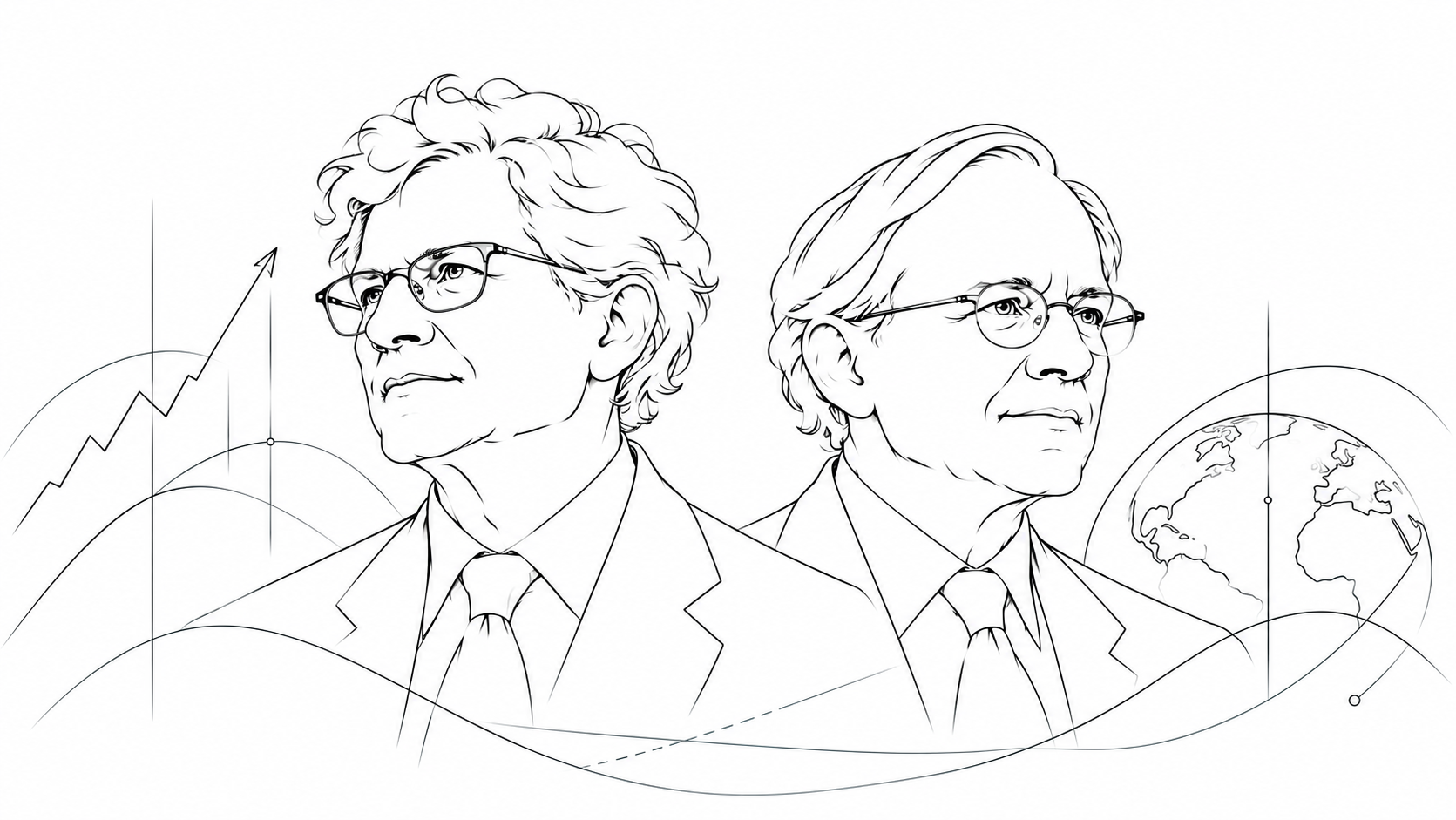
Nobel in Economics awarded to two economists who revolutionized economic stability theories
American economists Robert E. Hall and Michael Woodford have been awarded the Nobel Prize in Economic Sciences 2026, for their contribution to the development of theories that explain how individual decisions, expectations, and monetary policies affect economic stability.
The Royal Swedish Academy of Sciences has awarded the prize to the two economists for research on the microeconomic foundations of macroeconomic stabilization, a field that links the behavior of individuals and firms to overall economic developments.
Their studies have influenced how economists analyze consumption, savings, unemployment, inflation, and interest rates, helping develop the models used for designing and evaluating economic policies.
Robert E. Hall: Consumption, Savings, and Unemployment
Robert E. Hall, professor emeritus at Stanford University, is known for his contributions to consumption theory and labor market analysis.
One of his most important contributions relates to how individuals decide to consume or save.
Hall argued that, under certain theoretical conditions, changes in consumption depend primarily on new information that alters expectations about lifetime income, rather than simply on changes in current income.
This approach challenged the simpler models that linked consumption directly to current income.
Hall has also made important contributions to the study of unemployment, analyzing the mechanisms that affect job creation and the duration of unemployment during economic cycles.
Michael Woodford: Inflation and Monetary Policy
Michael Woodford, professor at Columbia University, is considered one of the most influential economists in the development of modern monetary policy theory.
His work focuses on how central banks can influence inflation and economic activity through interest rates and market expectations.
Woodford helped develop the well-known New Keynesian models, which combine the decision-making of individuals and firms with the presence of prices that do not adjust immediately to economic changes.
One of the main conclusions of this approach is that monetary policy affects the economy not only through the current decisions of central banks, but also through expectations about future decisions.
This has influenced the development of modern central bank communication strategies, which aim to guide market expectations regarding inflation and interest rates.
From Keynes to modern theories: How did the understanding of economics change?
To understand the significance of Hall's and Woodford's contributions, it is necessary to compare them with the economic theories that dominated the 20th century.
In the 1930s, British economist John Maynard Keynes argued that economies could remain for long periods in a state of unemployment and low economic activity due to a lack of aggregate demand.
According to the Keynesian approach, government intervention through public spending and fiscal policies could help restore economic activity.
This theory fundamentally changed economic thinking, challenging the view that market mechanisms would necessarily and quickly restore the economy to full employment.
However, early Keynesian macroeconomic models often relied on statistical relationships between economic indicators, without fully explaining the individual decisions underlying them.
In the 1950s and 1960s, Milton Friedman and other monetist economists emphasized the role of the monetary supply in determining inflation and economic activity.
Friedman argued that persistent inflation is fundamentally linked to an excessive increase in the money supply relative to output.
He also challenged the idea that governments could permanently maintain lower unemployment by tolerating higher inflation.
Another important development came in the 1970s, when Robert Lucas and other economists developed the theory of rational expectations.
According to this approach, individuals and businesses form expectations not merely by repeating past experiences, but by using available information to forecast future developments.
Lucas argued that historical relationships between economic indicators can change when government policies change, because individuals adjust their behavior.
This critique spurred the development of macroeconomic models based on individual decision-making.
What did Hall and Woodford bring differently?
Hall's and Woodford's contributions represent two important developments within this transformation of economic thought.
Hall helped explain consumption and the labor market by relying on individual decision-making and expectations about the future.
Woodford, meanwhile, developed a theoretical framework that combines elements of Keynesian economics with rational expectations and microeconomic foundations.
The main difference between the approaches lies in how they explain the economy's response to public policies.
While classical economics, represented by Adam Smith and David Ricardo, emphasized market mechanisms, competition, and the role of prices, Keynes shifted attention to aggregate demand and the need for state intervention during crises.
Friedman gave priority to the role of monetary policy and inflation control, whereas Lucas emphasized that individuals' expectations can alter the effects of economic policies.
Hall further developed consumption analysis, highlighting the importance of new information and expectations about future income. Woodford, on the other hand, combines Keynesian elements with rational expectations, explaining how central banks can influence the economy through interest rates and the communication of their policies.
Although these theories differ in their assumptions and conclusions, the development of economic thought does not represent a complete replacement of one theory by another.
Modern models have incorporated elements from several economic schools, while many of their conclusions continue to be debated and tested using empirical data.
From theory to practice: How do these studies affect today's economy?
The importance of these contributions becomes especially evident during periods of high inflation or economic slowdown.
According to the simplest traditional models, a central bank can affect the economy by changing the interest rate, which then influences lending, consumption, and investment.
The models developed by Woodford also place special importance on how individuals and firms interpret central bank decisions.
For example, if a central bank signals that interest rates will remain high for an extended period, this can affect credit and investment decisions even before future rate changes.
Similarly, Hall's studies help explain why a temporary increase in income does not necessarily translate into an equivalent increase in consumption.
If families view the income increase as temporary, they may choose to save a considerable portion of it.
These mechanisms are important for assessing the effectiveness of fiscal and monetary policies.
However, the actual responses of consumers and firms also depend on other factors, including uncertainty, credit constraints, and market conditions.
Nobel Prize in Economics
The Prize in Economic Sciences in Memory of Alfred Nobel was established in 1968 by the Central Bank of Sweden and was first awarded in 1969.
Unlike the five original Nobel Prizes, it was not part of Alfred Nobel's will, but is administered under similar principles.
The prize recognizes scientific contributions that have changed the understanding of economic processes, including economic theory, statistical methods, and empirical research.
Hall's and Woodford's contributions illustrate the development of modern macroeconomics toward a deeper understanding of the relationship between individual decisions, expectations, and economic policies.
Mbi 250 mijë kosovarë me leje qëndrimi në BE brenda gjashtë vjetësh
Mbi 250 mijë kosovarë me leje qëndrimi në BE brenda gjashtë vjetësh

President Shiroka-Pula Takes Office Following Inauguration Ceremony
The President of the Republic of Kosovo, Justina Shiroka-Pula, officially took office after the solemn inauguration ceremony, the President's Office announced.
According to the announcement, the inauguration ceremony was attended by heads of Kosovo's institutions, representatives of central and local institutions, political representatives and deputies, as well as ambassadors and representatives of diplomatic missions accredited in the country.
After the ceremony concluded, Shiroka-Pula officially assumed the duties from the acting President, Albulena Haxhiu, thus marking the institutional transfer of presidential responsibilities.
On taking office, Shiroka-Pula said that her aim is for the work of the President's institution to be in the interest of all citizens and of the Republic of Kosovo.
“Our goal is to work and contribute in the interest of all the country's citizens, in the interest of the Republic,” she declared.
The President's Office announced that the start of the new term will focus on institutional responsibility, respect for the Constitution and the laws of the Republic of Kosovo, as well as the exercise of duties in the interest of citizens and the country.
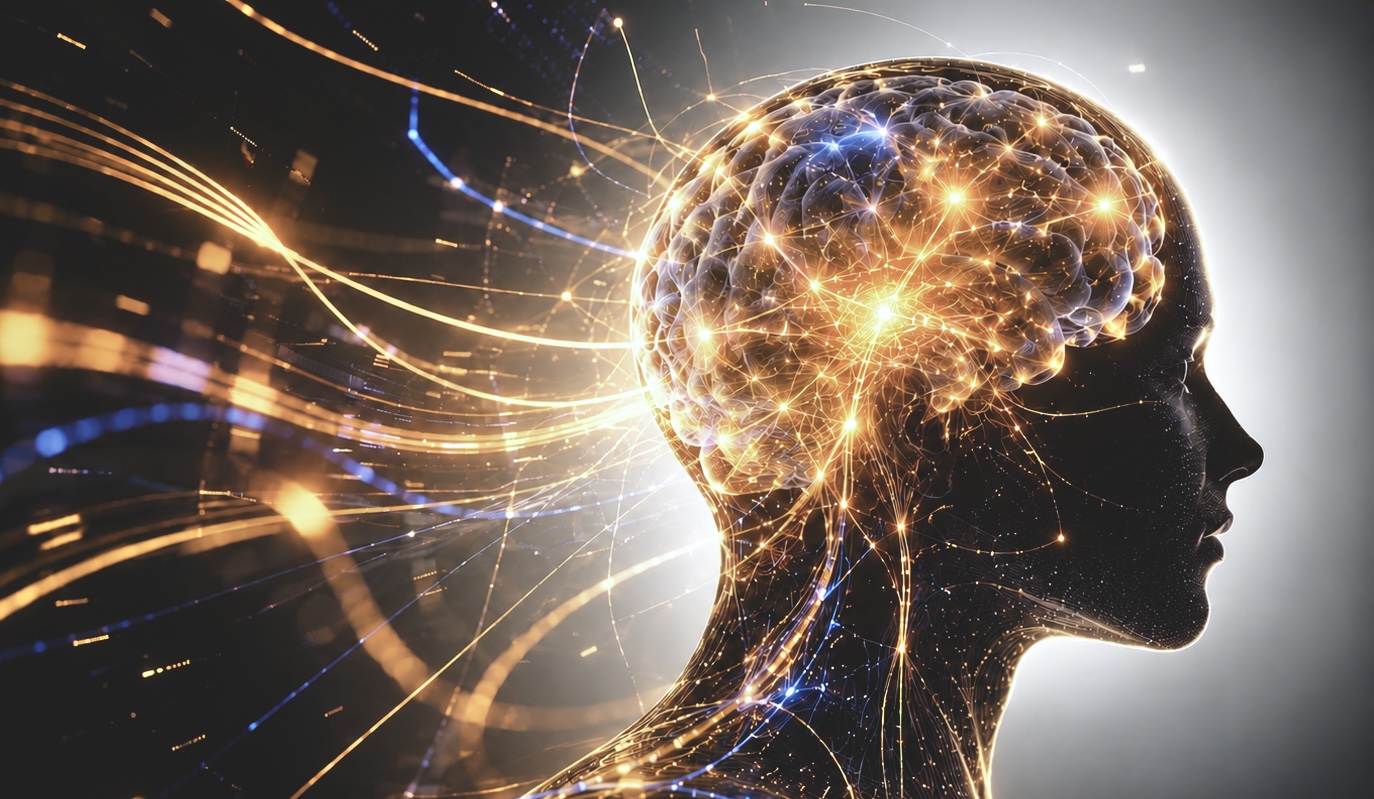
Technology that controls the brain awarded a Nobel
The Nobel Prize in Physiology or Medicine for 2026 was awarded to Karl Deisseroth, Peter Hegemann and Georg Nagel for discoveries that enabled the development of optogenetics, a technology that uses light to control neuronal activity.
The Nobel Assembly at the Karolinska Institute announced that the discoveries of the three scientists have created new opportunities to study how the brain works, allowing researchers to activate or inhibit specific neurons within milliseconds.
Optogenetics combines genetics with the use of light. Through light-sensitive proteins known as opsins, scientists can influence the electrical activity of nerve cells. This enables them to control neuronal activity on the millisecond scale.
The road to this technology began with the study of organisms that respond to light. Peter Hegemann and Georg Nagel played a decisive role in the discovery and characterization of channelrhodopsins, proteins that act as light-activated ion channels.
When exposed to appropriate light, these proteins open channels in the cell membrane and alter ion flow, affecting its electrical signals.
Karl Deisseroth and his collaborators later demonstrated that these mechanisms can be used to control neurons. By introducing light-sensitive proteins into nerve cells, researchers can activate them with light pulses.
This method gave neuroscientists a new tool to determine not only which parts of the brain are activated during a given process, but also whether the activity of a specific group of neurons causes a particular behavior or response.
In this way, researchers can activate or inhibit specific neural circuits and observe almost immediate effects on movement, perception, memory, emotions, and behavior.
The technology has become one of the most important tools of modern neuroscience and is used in laboratories worldwide to understand the organization and function of neural circuits.
Beyond its importance for basic research, optogenetics has also opened possibilities for developing new methods against neurological diseases and for restoring lost functions of the nervous system. However, many of the potential therapeutic applications remain in the research phase.
The discoveries of Deisseroth, Hegemann and Nagel have changed how scientists can study the brain: from observing neuronal activity to directly and precisely intervening in their activity using light.
Source: Nobel Prize

Parliament approves draft law that moves part of the Special Court's jurisdiction to Kosovo
The Assembly of Kosovo, in an extraordinary session, has adopted with 91 votes in the first reading Bill No. 11/L-001 for the amendment and completion of Law No. 05/L-053 on the Specialized Chambers and the Office of the Specialized Prosecutor.
The bill was proposed by the deputy of the Democratic Party of Kosovo, Përparim Gruda, who during the presentation before the deputies said that the changes aim to limit the jurisdiction of the Specialized Chambers for future cases, leaving them the competence related to the claims on which, according to him, this mechanism was originally established.
Gruda said that the proceedings held in The Hague have shown that the claims of organ trafficking, raised in the Dick Martyt report, have not materialized into charges and judicial proceedings developed so far.
“The six‑year process of trying the KLA leaders in The Hague, the accusation and the first‑instance decision, have proven beyond any doubt that there was no organ trafficking,” declared Gruda.
According to him, the bill does not remove the Specialized Chambers' ability to continue investigating the claims of organ trafficking, but aims to remove a part of the jurisdiction related to war crimes.
“This law does not take away the Special Court’s right to continue investigating the organ trafficking accusation, but this law does only one thing: it removes a part of the Special Court’s jurisdiction that concerns war crimes,” he said.
Gruda argued that the jurisdiction over war crimes was granted to the Specialized Chambers through the law and not directly through the constitutional amendment. He also referred to a decision of the Specialized Chamber of the Constitutional Court, which he said notes that the Assembly had granted additional authorizations through the law.
“Moreover, the Constitutional Chamber in The Hague says that, had it wanted, the Kosovo Assembly would have reduced this jurisdiction by law only to the specific claims of the Dick Martyt report. That has been precisely our motive for addressing the amendment of the law,” declared Gruda.
Existing cases would continue in The Hague
According to Gruda’s presentation, the proposed changes would not interrupt the existing proceedings against Hashim Thaçi, Kadri Veseli, Jakup Krasniqi and Rexhep Selimi.
He said that these cases would continue under the bill in the Specialized Chambers until the conclusion of the procedure at the second instance.
“The existing cases, such as those of Mr. Thaçi, Mr. Veseli, Mr. Krasniqi and Mr. Selimi, continue under this bill to be tried in The Hague until the second‑instance decision, until a final decision,” said Gruda.
However, according to him, if a case were to proceed to a third instance, the bill provides that such procedure would take place in Kosovo.
“If there is a third‑instance judgment, namely if there is a judgment in the Supreme Court, the law provides that it be transferred to Kosovo,” he declared.
Greater oversight and transparency
Another change presented by Gruda concerns the possibility for the Assembly to engage international organizations, universities or institutes to oversee the work of the Specialized Chambers, including appeal procedures.
“The lack of transparency is unacceptable in any democratic system, especially when a decision on a case does not concern only the individual fate of a few people under accusation, but concerns a part of a nation's history,” said Gruda.
The bill, according to him, also aims to expressly stipulate the application of the principle of the more favorable law for the accused, obliging the Specialized Chambers to apply it.
“We have included a specific article that obliges the Specialized Chambers to apply one of the most fundamental principles of domestic and international criminal justice: the application of the more favorable law,” declared the PDK deputy.
Gruda: The Constitution is not changed and international obligations are not violated
Gruda insisted that the proposed changes do not require amending the Constitution of Kosovo and, in his interpretation, do not breach the international obligations undertaken by Kosovo or the agreement with the Netherlands.
“We are not changing the Constitution, we are not breaking the agreement. We are doing something that even the Constitutional Chamber there has noted: war crimes can be tried and judged in Kosovo,” he said.
He also argued that the constitutionality of the law approved by the Assembly can be examined only by the Constitutional Court of Kosovo and not by the Specialized Chamber of the Constitutional Court in The Hague.
“The decisions of this Assembly, of a sovereign state, cannot be overseen by the Constitutional Chamber in The Hague. Every country has a Constitutional Court. We have a Constitutional Court,” declared Gruda.
According to him, any dispute over the bill after its adoption must be brought before the Constitutional Court in Pristina.
“This law does not aim to evade justice”
In concluding the presentation, Gruda said that the initiative does not aim to deny victims their right to justice, but to change the manner and jurisdiction in which future cases related to war crimes will be addressed.
“This law does not aim to evade justice, it does not aim to deny victims the right to receive answers and to obtain justice. But this law guarantees justice and does not allow the history of a nation to be tarnished in the name of justice,” said Gruda.
With 91 votes in the first reading, the bill has already passed the first stage of parliamentary review and will continue further procedures in the Assembly.

Google accelerates quantum research with Gemini 4 Argon model
Google has introduced Gemini 4 Argon, its newest artificial intelligence model, developed to handle complex tasks in programming, scientific research, finance, law, and cybersecurity. The model is designed to reason in an advanced manner and to carry out processes that require many steps and long time to complete.
One of the main innovations is the increase of the text limit that the model can generate in a single response, from 64 thousand to 1 million tokens. This expansion enables it to handle more complex problems, perform deeper analyses, and execute long tasks without needing to split them into many separate processes.
The model also includes advanced capabilities for research in quantum physics, assisting in the analysis of complex systems, the development of quantum algorithms, and the solving of mathematical problems related to this field. These capabilities can support scientific research and the development of future quantum computing technologies.
According to Google, Gemini 4 Argon is already being used within the company for the development and improvement of computer programs. Among the projects where it is being applied is the migration of large systems from C and C++ languages to Rust, including parts of the Fuchsia operating system. The model has also been developed to autonomously identify, verify, and correct security vulnerabilities in computer programs.
In performance tests, the model has shown competitive results against advanced models from OpenAI and Anthropic, especially in programming, professional tasks, and cybersecurity. However, the results vary depending on the type of testing and do not demonstrate superiority in every area.
Currently, Gemini 4 Argon is available only to a selected group of cybersecurity specialists through the Fairwind program. Google has announced that access will be expanded gradually, initially for paying API customers and Google AI Ultra subscribers, before the model becomes more widely available.
The initial price will be $2 for one million input tokens and $10 for one million output tokens. After the promotional period ends, these prices will double. Google has not yet set a date for the model's general launch.