Health
Monday, October 19, 2026
Lifestyle · Trends · Tips

Can loud noise trigger changes in the heart’s electrical activity?
An extremely loud noise, such as that produced by a motorcycle, does not affect only the ear. It activates the nervous system, causing a temporary increase in heart rate and blood pressure and placing additional strain on the heart. The World Health Organization (WHO) describes this mechanism as one of the biological pathways through which noise can affect the cardiovascular system.For a healthy person, the response to a very loud motorcycle passing by is usually brief. The situation becomes more relevant in people who are predisposed to heart disease or other cardiovascular disorders.
ArrhythmiasAn extremely loud and sudden noise can trigger a powerful response in the body. Within seconds, the sympathetic nervous system is activated, increasing the release of adrenaline and noradrenaline. These changes can directly influence the way the heart generates and conducts its electrical impulses by increasing the firing rate of the sinus node, altering electrical conduction, and affecting the repolarization of heart muscle cells.This does not mean that motorcycle noise physically interferes with the heart’s electrical activity. The primary mechanism is neurocardiac: the noise is perceived by the auditory system, the brain activates the stress response, and the autonomic nervous system and stress hormones alter cardiac activity. In a predisposed person, these changes can affect the electrical stability of the heart.
HypertensionPeople with high blood pressure may be more sensitive to a further, sudden rise in blood pressure during a strong stress response. Very loud noise stimulates the release of adrenaline and noradrenaline, which accelerate the heart rate and cause temporary constriction of blood vessels. As a result, arterial blood pressure may temporarily increase.In people with uncontrolled hypertension or other cardiovascular disease, these fluctuations may represent an additional burden on the heart and blood vessels.
Angina and the Heart’s Electrical ActivityA sudden increase in heart rate and blood pressure also increases the heart’s demand for oxygen.Continuous or repeated exposure to noise is associated with an increased risk of ischemic heart disease. The proposed mechanism involves repeated activation of the stress response, increases in blood pressure and stress hormones, and sleep disturbance. Over time, these effects may contribute to impaired blood-vessel function and increased cardiovascular strain.In some people, the heart’s electrical system takes longer than usual to “reset” after each heartbeat. In most people, the heart tolerates the stress response without difficulty. However, in susceptible individuals, the combination of slower electrical recovery and a sudden surge of adrenaline may make the heart rhythm less stable.This does not mean that motorcycle noise usually causes a heart attack or an arrhythmia. The intensity, proximity, duration, and frequency of exposure, as well as the individual’s underlying health, are all important factors.
Ad space
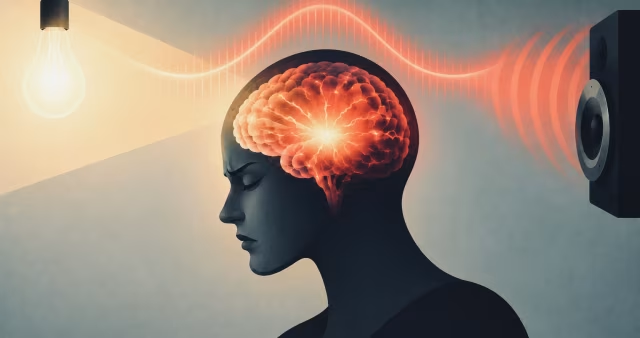
Sensory hypersensitivity: When a common stimulus triggers a powerful neurological response
At every moment, the brain receives a large amount of information from the environment. Voices, light, movements, touch, aromas and changes in body position are continuously processed and filtered so that attention can focus on the most important information.
But for some people, stimuli that are completely normal for others can be perceived as extremely intense. This condition is widely known as sensory hypersensitivity.
A person may perceive ordinary sounds as overly loud or painful, have difficulty with bright light, be disturbed by certain visual patterns, or feel touch and vibration much more intensely. In some cases, several senses may be affected simultaneously.
Sensory hypersensitivity does not necessarily mean that the eyes, ears or skin are physically capturing more information. The difference may lie in how this information is processed by the nervous system.
In some disorders it is thought that the mechanism by which the brain regulates the intensity of sensory signals may change. Signals may be amplified or not filtered with the same efficiency as usual.
Excessive sensitivity to sound and light, known as photophobia, appears in certain neurological conditions. It is especially common in migraine, but can also occur after head trauma and in other neurological or eye disorders.
Someone may react strongly to sudden noises, repetitive sounds, flashing lights, screens, high‑contrast patterns, fast‑moving objects, vibrations, touch, certain textures or strong odors.
Sensory hypersensitivity is a symptom, not a disease in itself. Its significance depends on how it presents, when it began, and whether it is accompanied by other neurological symptoms.
In a relatively rare group of epilepsies known as reflex epilepsies, a specific stimulus can repeatedly provoke epileptic seizures. The most well‑known example is photosensitive epilepsy.
Flashing lights, rapid changes in illumination and certain visual patterns can trigger epileptic activity in predisposed individuals. But the phenomenon is not limited to visual stimuli.
Rare forms of reflex seizures linked to sound, music, touch, movement, reading, eating and unexpected stimuli have been described.
The brain operates through coordinated electrical activity among billions of nerve cells.
When we see a light, hear a sound or feel a touch, specific neural networks are activated. Normally, this activity is regulated by a balance between mechanisms that activate neurons and those that curb excessive activity.
In some forms of reflex epilepsy, it is thought that the network that normally processes a stimulus may overlap with a brain region or network that has abnormal excitability.
In this situation, a normal stimulus can activate the network to the point where neuronal activity crosses a threshold and turns into synchronized epileptic activity.
This helps explain why a stimulus that causes no problem for most people can provoke a much stronger reaction in a predisposed individual.
Migraine, hyperacusis, sleep deprivation, anxiety, hypervigilant states, head injuries and various neurological disorders can be associated with increased sensitivity to stimuli without epilepsy.
Sensory hypersensitivity is also common in individuals with autism spectrum disorder. Noise, light, touch, odors or textures can be perceived much more intensely, causing sensory overload and distress.
Essentially, sensory hypersensitivity indicates that the way the brain processes environmental information can vary markedly from one person to another. For most, this sensitivity is not linked to epilepsy, but when a particular stimulus repeatedly triggers abnormal neurological episodes, a more detailed assessment may be required.
But for some people, stimuli that are completely normal for others can be perceived as extremely intense. This condition is widely known as sensory hypersensitivity.
A person may perceive ordinary sounds as overly loud or painful, have difficulty with bright light, be disturbed by certain visual patterns, or feel touch and vibration much more intensely. In some cases, several senses may be affected simultaneously.
The brain amplifies sensory signals
Sensory hypersensitivity does not necessarily mean that the eyes, ears or skin are physically capturing more information. The difference may lie in how this information is processed by the nervous system.
In some disorders it is thought that the mechanism by which the brain regulates the intensity of sensory signals may change. Signals may be amplified or not filtered with the same efficiency as usual.
Excessive sensitivity to sound and light, known as photophobia, appears in certain neurological conditions. It is especially common in migraine, but can also occur after head trauma and in other neurological or eye disorders.
Light, sound and vibrations
Someone may react strongly to sudden noises, repetitive sounds, flashing lights, screens, high‑contrast patterns, fast‑moving objects, vibrations, touch, certain textures or strong odors.
Sensory hypersensitivity is a symptom, not a disease in itself. Its significance depends on how it presents, when it began, and whether it is accompanied by other neurological symptoms.
Stimuli cause abnormal electrical activity
In a relatively rare group of epilepsies known as reflex epilepsies, a specific stimulus can repeatedly provoke epileptic seizures. The most well‑known example is photosensitive epilepsy.
Flashing lights, rapid changes in illumination and certain visual patterns can trigger epileptic activity in predisposed individuals. But the phenomenon is not limited to visual stimuli.
Rare forms of reflex seizures linked to sound, music, touch, movement, reading, eating and unexpected stimuli have been described.
Overly reactive neural networks
The brain operates through coordinated electrical activity among billions of nerve cells.
When we see a light, hear a sound or feel a touch, specific neural networks are activated. Normally, this activity is regulated by a balance between mechanisms that activate neurons and those that curb excessive activity.
In some forms of reflex epilepsy, it is thought that the network that normally processes a stimulus may overlap with a brain region or network that has abnormal excitability.
In this situation, a normal stimulus can activate the network to the point where neuronal activity crosses a threshold and turns into synchronized epileptic activity.
This helps explain why a stimulus that causes no problem for most people can provoke a much stronger reaction in a predisposed individual.
Migraine, hyperacusis, sleep deprivation, anxiety, hypervigilant states, head injuries and various neurological disorders can be associated with increased sensitivity to stimuli without epilepsy.
Sensory hypersensitivity is also common in individuals with autism spectrum disorder. Noise, light, touch, odors or textures can be perceived much more intensely, causing sensory overload and distress.
Essentially, sensory hypersensitivity indicates that the way the brain processes environmental information can vary markedly from one person to another. For most, this sensitivity is not linked to epilepsy, but when a particular stimulus repeatedly triggers abnormal neurological episodes, a more detailed assessment may be required.