Energy
Monday, October 19, 2026
Economy · Analysis · Developments
The Mega-Deal Set to Create a New Rival to Saudi Aramco
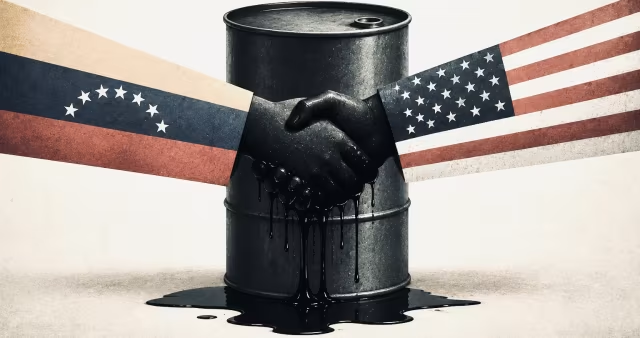
The United States and Venezuela have reached an extraordinary agreement to exploit a portion of the large oil reserves of the Latin American country, giving Washington a direct role in the development of fields containing more than 65 billion proven barrels of oil.
The agreement was made public by U.S. President Donald Trump, who said that the United States has secured majority control over these reserves through a partnership with the private sector.
At the heart of the agreement is the creation of a new economic structure for the development and exploitation of Venezuelan fields. According to details made public so far, the American side is expected to have about 55 percent effective control of this structure, through a combination of equity participation in companies and the right to receive a share of the oil at production cost.
The interim Venezuelan government has announced that the project includes 17 strategic fields with proven potential of around 65 billion barrels.
The scale of the agreement becomes clearer when this amount is compared to Venezuela's overall reserves. The country holds about 303 billion barrels of proven reserves, more than any other nation in the world.
Thus, the agreement affects roughly one fifth of all known Venezuelan reserves.
According to information released by U.S. officials, the rights to develop the fields could last up to 100 years.
If this structure is implemented according to the declared parameters, the United States would gain a long‑term oil source in the Western Hemisphere without needing to purchase the underground reserves itself.
For Caracas, the main benefit is not only oil production, but the return of capital to an industry that for years has operated far below its potential.
The agreement is projected to mobilize roughly $100 billion in private investment.
Interim President Delcy Rodríguez has declared that the development of the 17 fields could bring the Venezuelan state over $209 billion in tax revenue over the project's lifespan.
Venezuela has the world's largest proven oil reserves, but current production is only about 1.25 million barrels per day. For years, lack of investment, aging infrastructure, sanctions and political uncertainty have limited the country's ability to turn reserves into production.
The agreement comes after Nicolás Maduro's departure from power, marking a major shift in relations between Washington and Venezuela after years of sanctions and isolation.
The agreement was made public by U.S. President Donald Trump, who said that the United States has secured majority control over these reserves through a partnership with the private sector.
At the heart of the agreement is the creation of a new economic structure for the development and exploitation of Venezuelan fields. According to details made public so far, the American side is expected to have about 55 percent effective control of this structure, through a combination of equity participation in companies and the right to receive a share of the oil at production cost.
The interim Venezuelan government has announced that the project includes 17 strategic fields with proven potential of around 65 billion barrels.
The scale of the agreement becomes clearer when this amount is compared to Venezuela's overall reserves. The country holds about 303 billion barrels of proven reserves, more than any other nation in the world.
Thus, the agreement affects roughly one fifth of all known Venezuelan reserves.
According to information released by U.S. officials, the rights to develop the fields could last up to 100 years.
If this structure is implemented according to the declared parameters, the United States would gain a long‑term oil source in the Western Hemisphere without needing to purchase the underground reserves itself.
For Caracas, the main benefit is not only oil production, but the return of capital to an industry that for years has operated far below its potential.
The agreement is projected to mobilize roughly $100 billion in private investment.
Interim President Delcy Rodríguez has declared that the development of the 17 fields could bring the Venezuelan state over $209 billion in tax revenue over the project's lifespan.
Venezuela has the world's largest proven oil reserves, but current production is only about 1.25 million barrels per day. For years, lack of investment, aging infrastructure, sanctions and political uncertainty have limited the country's ability to turn reserves into production.
The agreement comes after Nicolás Maduro's departure from power, marking a major shift in relations between Washington and Venezuela after years of sanctions and isolation.
Ad space
Do we have a gas culture?
When it comes to building a natural gas network in Kosovo, it often creates the impression that citizens would have to get used to a new energy source. In fact, the reality is quite different. Kosovo does not have a cultural shortage of using gas – it only lacks modern infrastructure to supply it.
After the war in 1999, the country faced significant shortages of electricity. For years, power outages lasted for hours and at certain times reached up to 16 hours a day. Faced with this situation, families and businesses were forced to find alternatives. Gas cylinders became part of everyday life for cooking and additional heating. Restaurants, bakeries, pastry shops, and many small businesses relied on gas to continue their activities without depending on the electricity supply.
For over two decades, Kosovo has imported hundreds of thousands of tons of gas, creating a functional off-grid gas economy. The use of gas cylinders is a common skill among citizens. It's not uncommon to say that even a grandmother in Kosovo knows how to replace a gas cylinder to prepare morning coffee.
This shows that the challenge for Kosovo is not the acceptance of gas as an energy source. It is already part of daily life. The challenge is transitioning from an off-grid distribution system with individual cylinders to a modern transmission and distribution network (on-grid) that continuously supplies families and businesses.
A natural gas network would bring considerable benefits to the country's energy system. Today, a large part of cooking and a significant portion of heating are done with electricity, increasing the load on the grid, especially during winter months. If cooking and part of the heating needs were covered with natural gas, the demand for electricity would decrease significantly during peak hours. This would reduce the need for expensive electricity imports, reduce pressure on the electrical grid, and improve supply security.
Furthermore, gas is one of the most efficient sources for heat production. Transporting energy in the form of gas through pipelines requires very little additional energy, and losses are minimal. On the other hand, electricity loses part of it during transmission and distribution in the grid. The less electricity used for processes that can be covered by gas, the less pressure on the grid and the more efficient the entire energy system becomes.
The benefits are not limited to the energy sector. A modern gas network would lower operating costs for restaurants, bakeries, hotels, laundries, hospitals, and the processing industry. It would make Kosovo more attractive for industrial investments, increase the competitiveness of the economy, and create a new source of energy security in the face of future crises.
At the same time, developing a gas network would not imply replacing electricity. Instead, it would create a more balanced energy system, where each source is used where it is most efficient. Electricity would be freed up for sectors that need it most, while gas would cover functions where it is economically and technically more favorable.
Another significant benefit of an on-grid gas system is related to security. Unlike the use of individual cylinders, which are often bought from various sources without guarantees for origin, maintenance, or periodic testing, a gas network would be under constant supervision by authorities and a licensed operator.
Pipelines, metering stations, and connections would be subject to technical standards, regular inspections, and monitoring systems, significantly reducing the risk of leaks, manipulations, or unsafe equipment. A regulated and continuously monitored system would offer a much higher level of security for families and businesses, compared to relying on cylinders circulating in the market without the same institutional control.
Kosovo is not starting from scratch. For over 25 years, citizens and businesses have shown that they know how to use gas and have integrated it into their daily lives. The culture of gas exists. What is missing is the infrastructure that would transform this culture from a cylinder-based system to a modern, safe, continuous, and more economical network for the entire country.
After the war in 1999, the country faced significant shortages of electricity. For years, power outages lasted for hours and at certain times reached up to 16 hours a day. Faced with this situation, families and businesses were forced to find alternatives. Gas cylinders became part of everyday life for cooking and additional heating. Restaurants, bakeries, pastry shops, and many small businesses relied on gas to continue their activities without depending on the electricity supply.
For over two decades, Kosovo has imported hundreds of thousands of tons of gas, creating a functional off-grid gas economy. The use of gas cylinders is a common skill among citizens. It's not uncommon to say that even a grandmother in Kosovo knows how to replace a gas cylinder to prepare morning coffee.
This shows that the challenge for Kosovo is not the acceptance of gas as an energy source. It is already part of daily life. The challenge is transitioning from an off-grid distribution system with individual cylinders to a modern transmission and distribution network (on-grid) that continuously supplies families and businesses.
A natural gas network would bring considerable benefits to the country's energy system. Today, a large part of cooking and a significant portion of heating are done with electricity, increasing the load on the grid, especially during winter months. If cooking and part of the heating needs were covered with natural gas, the demand for electricity would decrease significantly during peak hours. This would reduce the need for expensive electricity imports, reduce pressure on the electrical grid, and improve supply security.
Furthermore, gas is one of the most efficient sources for heat production. Transporting energy in the form of gas through pipelines requires very little additional energy, and losses are minimal. On the other hand, electricity loses part of it during transmission and distribution in the grid. The less electricity used for processes that can be covered by gas, the less pressure on the grid and the more efficient the entire energy system becomes.
The benefits are not limited to the energy sector. A modern gas network would lower operating costs for restaurants, bakeries, hotels, laundries, hospitals, and the processing industry. It would make Kosovo more attractive for industrial investments, increase the competitiveness of the economy, and create a new source of energy security in the face of future crises.
At the same time, developing a gas network would not imply replacing electricity. Instead, it would create a more balanced energy system, where each source is used where it is most efficient. Electricity would be freed up for sectors that need it most, while gas would cover functions where it is economically and technically more favorable.
Another significant benefit of an on-grid gas system is related to security. Unlike the use of individual cylinders, which are often bought from various sources without guarantees for origin, maintenance, or periodic testing, a gas network would be under constant supervision by authorities and a licensed operator.
Pipelines, metering stations, and connections would be subject to technical standards, regular inspections, and monitoring systems, significantly reducing the risk of leaks, manipulations, or unsafe equipment. A regulated and continuously monitored system would offer a much higher level of security for families and businesses, compared to relying on cylinders circulating in the market without the same institutional control.
Kosovo is not starting from scratch. For over 25 years, citizens and businesses have shown that they know how to use gas and have integrated it into their daily lives. The culture of gas exists. What is missing is the infrastructure that would transform this culture from a cylinder-based system to a modern, safe, continuous, and more economical network for the entire country.